Hello and welcome to the details of ‘We will leave when money runs out’: Migrant workers in Delhi hit by soaring LPG costs and now with the details
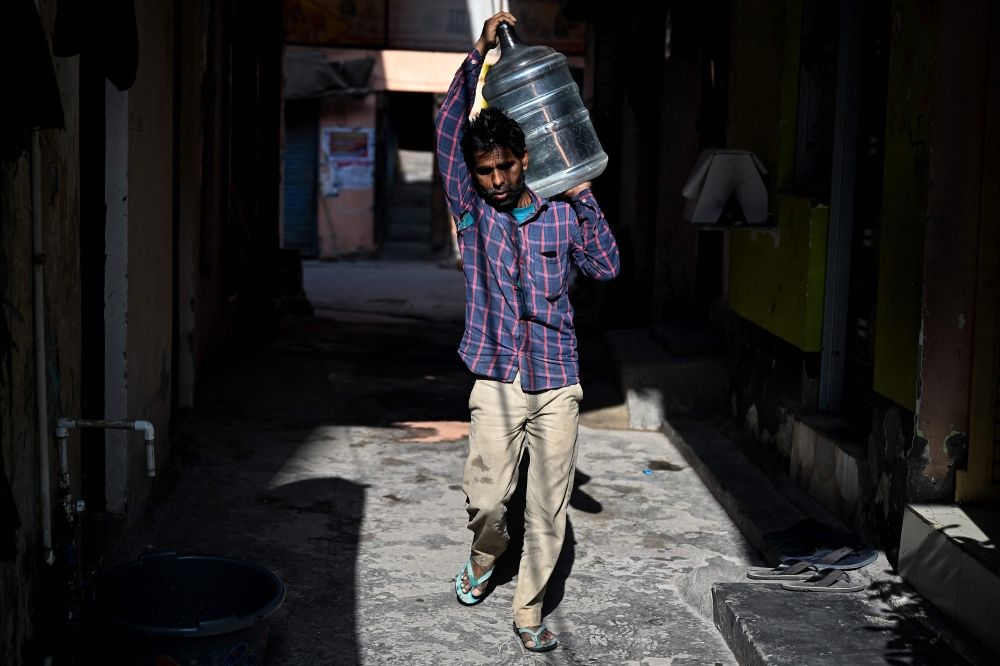
Nevin Al Sukari - Sana'a - A migrant worker carries a plastic water container in New Delhi on April 9, 2026. Migrant workers in India's capital reeling from an energy crunch sparked by the Mideast war, are weighing whether to leave New Delhi for good. — AFP pic
NEW DELHI, April 13 —Domestic migrants in India, who often travel thousands of kilometres for work are weighing up whether to leave New Delhi for good as energy resources choked by the Middle East war dwindle.
Black market prices of cooking gas cylinders have soared beyond what labourers living hand-to-mouth can earn and, even if energy flows resume soon, they worry it could take weeks for the impact to filter down to them.
Crouched over smoky fires at dawn, using wood shavings to cook a breakfast of flat bread chapatis, dozens of construction workers say they are ready to return home.
“We will just leave when (the) money finishes,” said Milan Kumar Mondal, who will make the 1,100-kilometre (685-mile) journey home to Katihar in Bihar state, when the last of his savings runs out.
India has more than 450 million internal migrants, according to the last census in 2011 and government estimates, forming the backbone of its informal economy.
Many move seasonally from poorer states such as Bihar and Uttar Pradesh to cities in search of construction, factory and daily wage work.
The South Asian nation, heavily dependent on imported energy, including roughly 60 per cent of its liquefied petroleum gas (LPG) needs, has seen supply chains strained by the war.
And while the government says there is no overall LPG shortage, and is ensuring the most vulnerable receive cooking gas, migrants in informal settlements say they are left out.
‘Savings uncertain’
Government rules mean a household can have only one registered LPG connection. For domestic migrants, that is back in their home village.
Incomes are volatile and savings minimal, making them particularly vulnerable to sudden price spikes or supply disruptions.
Mondal earns around 600-700 rupees (US$6.50-7.50) a day for construction work but, with LPG prohibitively expensive, he is barely breaking even.
Prices of cooking gas have surged by as much as five times on the black market, the only source he can access without formal paperwork.
“Earlier cooking gas was 80-90 rupees (US$0.86-0.97) per kilogram... Now it is 300-400 rupees, even 500 (US$5.40),” Mondal said.
Workers’ union leader Rajiv Kumar Pandit said swaths of migrant workers had left the city already.
“The situation is very bad,” he said. “Wages are irregular, gas is not available, and prices are extremely high.”
Ramesh Kumar Mahto, also from Bihar, is ready to return home once he is paid.
“I don’t think I will return to Delhi,” he said. “The crisis has made savings uncertain,” he said.
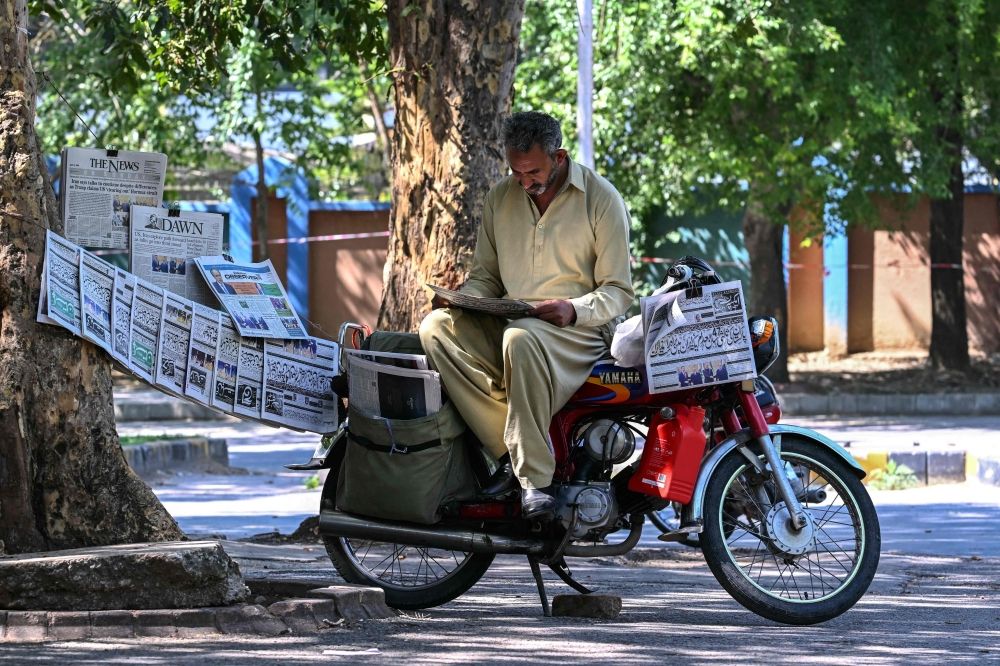
A vendor reads a newspaper displayed on a roadside after the US-Iran peace talks in Islamabad on April 12, 2026. — AFP pic
‘What is left?’
Many initially turned to firewood gathered from city forests or wood shavings from construction sites, but even the cost of that has now nearly doubled.
“We were cooking on firewood for the first 15 days of the crisis,” said Suresh Kumar from Bhagalpur district, noting that they cannot cook when it rains. “Now, even wood has become expensive.”
Electric stoves are not an option, since their power connection in tight-packed rooms is often only strong enough for a single charging point.
“If we use a heater or induction stove, the fuse goes off, the wiring burns,” Kumar said.
Food stalls are unaffordable—or mean the worker spends all that they earn.
“A labourer needs three meals a day because the work is heavy—lifting stones, working on multi-storey buildings,” construction worker Lalu Singh said.
“If we spend almost everything on food, what is left? It is better to go home and be with your family”.
Work is uncertain back in their villages—farming on leased land or daily wage labour—but living costs are lower and families share expenses.
Five-month pregnant Naseema, in Delhi’s Noor Nagar district, gathers wood from scrubland to cook for her six children and husband.
“If we can manage with the wood, we will,” she said. “After that, what option do we have—than to return back to our village?” — AFP
These were the details of the news ‘We will leave when money runs out’: Migrant workers in Delhi hit by soaring LPG costs for this day. We hope that we have succeeded by giving you the full details and information. To follow all our news, you can subscribe to the alerts system or to one of our different systems to provide you with all that is new.
It is also worth noting that the original news has been published and is available at Malay Mail and the editorial team at AlKhaleej Today has confirmed it and it has been modified, and it may have been completely transferred or quoted from it and you can read and follow this news from its main source.