
Hello and welcome to the details of What the Middle East war means for China’s ties with Iran and now with the details
Nevin Al Sukari - Sana'a - BEIJING, April 1 — The repercussions of the over month-long war in the Middle East have reached China, with petrol and plastic prices up and its diplomats pushing for peace.
Here’s what the world’s second-largest economy is weighing up in its relationship with Iran and the Middle East:
How close are China and Iran’s economies?
While China and Iran are sometimes considered part of a broader anti-Western group — alongside Russia and North Korea — their relationship is transactional.
“China is interested in Iran primarily as a source of discounted oil,” according to William Figueroa, a China-Iran expert at the University of Groningen.
The heavily sanctioned state relies on Chinese oil purchases to fill its coffers.
Beijing bought more than 80 per cent of Iranian oil exports last year, a vital source of revenue for Tehran, according to analytics firm Kpler, but that oil only accounted for 13 per cent of China’s seaborne crude imports.
China is far from reliant on Tehran, whose oil-rich neighbours in the Gulf “are generally seen as offering everything Iran has in a much more stable, US-friendly environment”, Figueroa said.
Despite a 2021 agreement for US$400 billion of Chinese investment in Iran over 25 years, little of that has materialised.
Meanwhile, Chinese trade with Iran was worth US$9.96 billion last year, compared to US$108 billion each with Saudi Arabia and the UAE, and US$51 billion with Iraq.
A couple sits on a bench at a park in northern Tehran overlooking the Iranian capital's skyline with Milad (Birth) Tower, the tallest tower in the country at 435 metres, pictured in the background, on March 30, 2026. — AFP pic
Is China providing military support to Tehran?
This economic asymmetry explains Beijing’s muted response to the US and Israeli military action and reticence to provide direct military support to the Iranian regime.
While China condemned the killing of supreme leader Ayatollah Khamenei, it has also criticised Iran’s attacks on the Gulf.
“Beijing has stopped short of overt military involvement, emphasising restraint and diplomacy,” said John Calabrese, a senior fellow at the Middle East Institute in Washington.
Iran may, however, be using China’s BeiDou satellite navigation system for drone and missile strikes, former French intelligence director Alain Juillet told the independent Tocsin podcast, as its targeting has grown increasingly accurate since its 12-day war with Israel last year.
China has previously supplied Iran with drones, dual-use chemicals, and has “likely shared intelligence”, Figueroa said.
US officials have also accused China’s state-owned semiconductor manufacturer SMIC of selling chipmaking equipment to the Iranian military.
But Beijing and Tehran have no formal military pact, and China’s leaders are unwilling to be dragged into a Middle East quagmire.
They have also resisted calls from US President Donald Trump for help reopening the Strait of Hormuz.
What diplomatic leverage does China have?
“China’s priorities are stability and continuity: keep energy flows open, protect commercial ties, and position itself for post-war influence,” Calabrese said.
This means pushing for an end to the conflict as soon as possible.
Foreign Minister Wang Yi has held calls with major regional players, and special envoy Zhai Jun has toured the region urging a ceasefire.
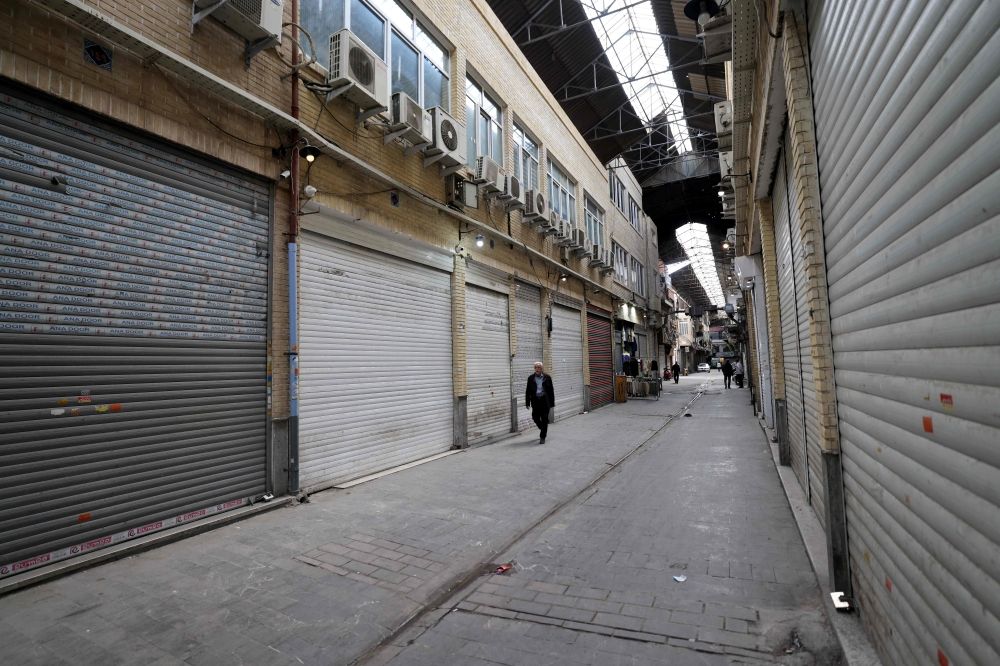
A man walks past closed shops at the Grand Bazaar in Tehran on March 30, 2026. — AFP pic
But China’s influence is limited.
Beijing has ended up in an “awkward diplomatic position” of not directly condemning Iran, but criticising violations of sovereignty against Gulf countries, said Andrea Ghiselli, international politics lecturer at the University of Exeter and head of research at the ChinaMed project.
“China hopes that the war will quickly wind down on its own, possibly with an American defeat. Yet, its capability and willingness to shape the situation in that direction should not be overstated,” Ghiselli told AFP.
Beijing wants Iran to stop targeting its partners in the region, but has so far failed to prevent it.
In 2023, China seemed to signal its growing clout in the region by brokering the re-establishment of diplomatic ties between Iran and Saudi Arabia.
This month, however, it has been unable to stop Iran slamming drones into Saudi oil infrastructure.
What are the opportunities and risks for Beijing?
While it may suit China to have the US military bogged down, the war poses major risks.
“Diplomatically, the war is a major gift to China’s foreign ministry, which simply has to sit back and allow the US to damage its own prestige and global reputation,” said Figueroa.
But high oil prices and the devastation of regional economies represents a threat to China’s own development.
“Its greatest vulnerability is the impact this will have on China’s export markets,” said Henry Tugendhat, a China expert at the Washington Institute for Near East Policy.
The blowback from the war will likely damage for major buyers of Chinese products in, for example, Europe “at a time when China’s economy remains desperately dependent on overseas demand to sustain its domestic economic growth targets”, he said.
Ultimately, Beijing sees Tehran as a useful partner and a thorn in the side of the US, but it does not want a nuclear-armed Iran or further instability.
“It prefers a familiar regime in Tehran but is pragmatic enough to adapt to political change, as it has in many other cases, like in Iran after the Shah,” Calabrese said. — AFP
These were the details of the news What the Middle East war means for China’s ties with Iran for this day. We hope that we have succeeded by giving you the full details and information. To follow all our news, you can subscribe to the alerts system or to one of our different systems to provide you with all that is new.
It is also worth noting that the original news has been published and is available at Malay Mail and the editorial team at AlKhaleej Today has confirmed it and it has been modified, and it may have been completely transferred or quoted from it and you can read and follow this news from its main source.