We show you our most important and recent visitors news details Iran escalates strikes across Middle East after Trump signals possible deal in the following article
Hind Al Soulia - Riyadh - DUBAI — Iran targeted countries across the Middle East region with a fresh volley of missiles Wednesday, hours after US President Donald Trump signaled tentative progress in diplomatic efforts to end the war.
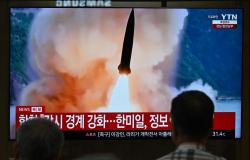
Iran fired a salvo of "precision-guided" missiles and drones at Israel and bases hosting US forces in Kuwait, Jordan and Bahrain, the country's Revolutionary Guards (IRGC) said early Wednesday.
The Saudi Defense Ministry said in a statement that air defenses intercepted and destroyed a ballistic missile and 31 drones over the Eastern Province.
The Civil Defense said debris from the intercepted missile fell on two homes, including one under construction, causing limited property damage. No casualties were reported.
In Kuwait, the Directorate General of Civil Aviation said drones targeted a fuel tank at Kuwait International Airport, sparking a fire at the site. Initial reports indicated only material damage from the attack.
Kuwait’s National Guard said it shot down one drone and five unmanned aerial vehicles in areas under its protection.
In Bahrain, the Interior Ministry said warning sirens sounded, without giving further details. It urged residents to remain calm and move to the nearest safe location.
Iran also claimed that it launched a cruise missile toward the US aircraft carrier Abraham Lincoln, according to state television. However, there is no immediate confirmation or response from US
officials.
Iranian Army public relations said coastal cruise missiles were fired in the direction of the US aircraft carrier. The claim, however, remains unverified independently.
The development comes after the Iranian Navy issued a direct warning to the US, saying that the USS Abraham Lincoln is under close surveillance and could be targeted if it approaches Iranian territory.
The war has also drawn in Lebanon, with Israeli forces aiming to take control of ground up to the Litani River, around 30 kilometres from the border, stepping up its campaign against Iran-backed Hezbollah militants.
Israel also said it was launching fresh missile strikes on the "infrastructure of the Iranian terror regime".
As the missile and drone attacks showed little sign of respite, Trump appeared to be ramping up efforts to bring the war to an end.
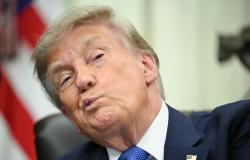
The US president, whose daily statements on the war have swung from threatening to conciliatory, said Washington was "in negotiations right now" with Tehran.
He told reporters in the Oval Office that Iran had given him "a very big present worth a tremendous amount of money", which he said demonstrated that "we're dealing with the right people".
Trump did not elaborate further but said it related to the Strait of Hormuz, which Iran has largely blockaded after US and Israeli strikes, sending global energy prices soaring.
Several media reported Trump had sent a 15-point plan to Iran via Pakistan, which has offered to mediate a possible end to the war.
Trump's cryptic statements on his eagerness to talk with Iran included repeating a claim that Tehran has "agreed they will never have a nuclear weapon".
Despite the US president's stated hopes for a deal, The Wall Street Journal reported that Washington is planning to send a further 3,000 soldiers to the Middle East.
Iranian officials have yet to confirm any formal talks.
As the warring parties traded strikes, focus remained on the strategic Strait of Hormuz, the key route through which one-fifth of the world's crude oil flows.
Tehran, in a message circulated by the International Maritime Organisation (IMO), assured safe passage through the strait to "non-hostile vessels".
However, the IMO cited a statement from Iran's foreign ministry as saying no passage would be granted to vessels belonging to the US and Israel.
The economic impact of the crisis has begun to bite around the world, with governments looking to cut energy consumption and airlines scaling back flights.
But Iran's pledge, along with Trump's more conciliatory tone, pushed stocks higher and sent oil prices lower in Asian trading.
The wider impact of the Strait of Hormuz's choking was highlighted by a warning from a top WTO
official in an interview with AFP.
"Fertilisers are the number one issue of concern today. If there is no more fertiliser, there is an impact on quantities but also on prices," Jean-Marie Paugam told AFP in an interview.
"The effect compounds the following year: harvests shrink and prices rise." — Agencies
These were the details of the news Iran escalates strikes across Middle East after Trump signals possible deal for this day. We hope that we have succeeded by giving you the full details and information. To follow all our news, you can subscribe to the alerts system or to one of our different systems to provide you with all that is new.
It is also worth noting that the original news has been published and is available at Saudi Gazette and the editorial team at AlKhaleej Today has confirmed it and it has been modified, and it may have been completely transferred or quoted from it and you can read and follow this news from its main source.