Hello and welcome to the details of Explainer: What is China’s Five-Year Plan and why does it shape the global economy? and now with the details
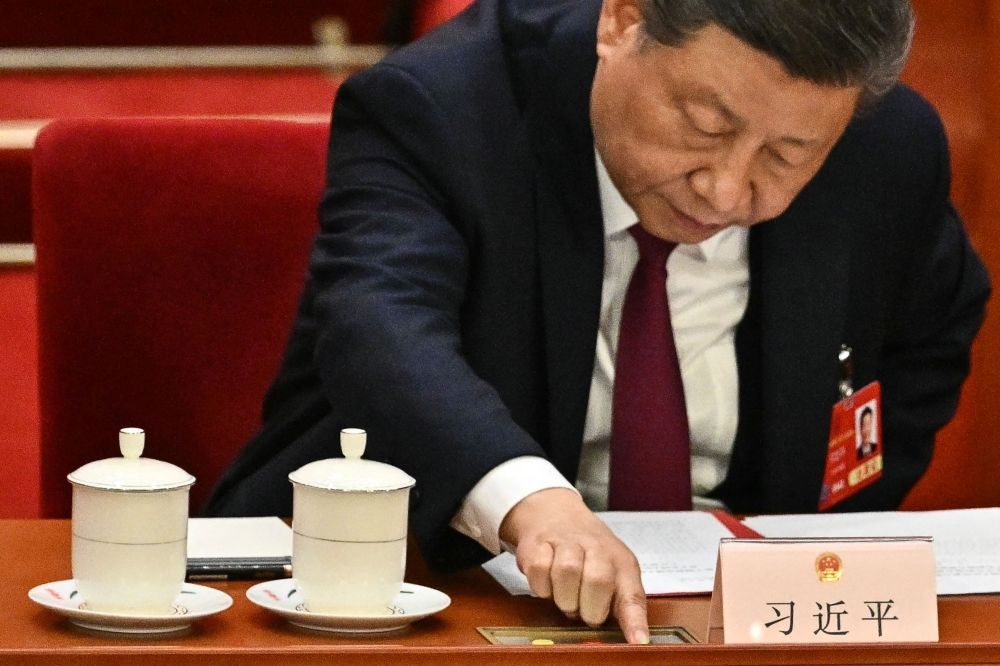
Nevin Al Sukari - Sana'a - China’s President Xi Jinping votes during the closing session of the National People’s Congress at the Great Hall of the People in Beijing on March 11, 2025. — AFP pic
BEIJING, March 3 — China’s new Five-Year Plan – a roadmap outlining its economic and social strategy to 2030 – is expected to be formally approved during the annual Two Sessions political conclave, which begins Wednesday.
A framework published in October already gives an idea of what the ruling Communist Party (CCP) considers its core aims for the coming years, with key themes including technological self-sufficiency, economic transformation and military might.
Here’s what you need to know:
What is the Five-Year Plan?
Originally a feature of the Soviet Union, five-year plans (FYPs) were initiated in China in 1953 by leader Mao Zedong.
Since then, Beijing has consistently released one every five years, except for the period between 1963 to 1965 following the Great Leap Forward, an economic campaign led by Mao that sparked catastrophic famine.
The 14th FYP, released in 2021, contained a total of 65 chapters.
It set targets for economic growth, strengthening technological capabilities and promoting rural revitalisation, amongst other objectives.
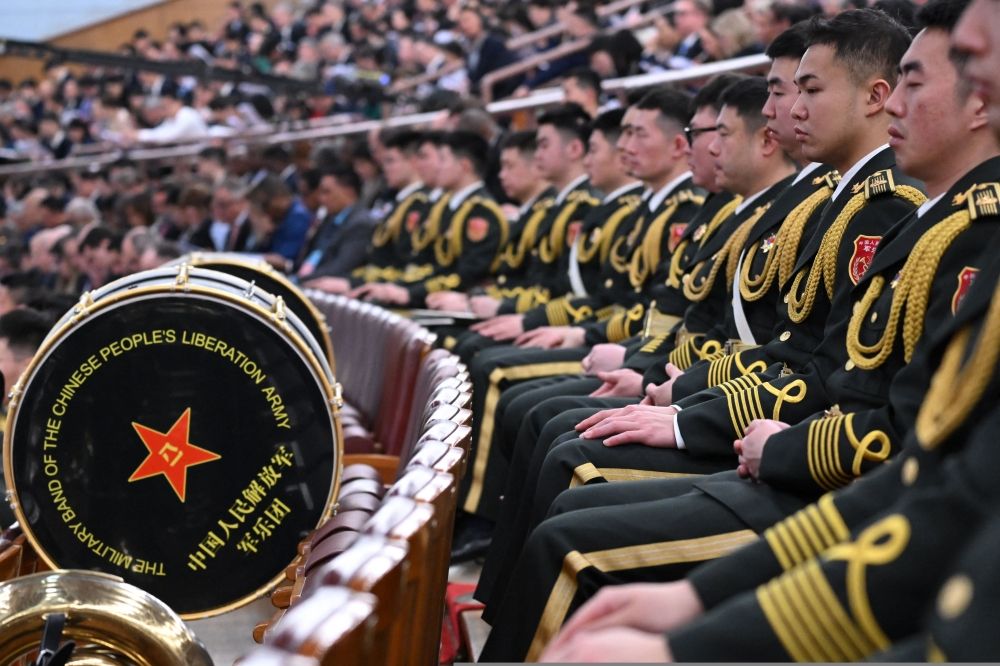
The People’s Liberation Army band members attend the opening session of the National People’s Congress at the Great Hall of the People in Beijing on March 5, 2025. — AFP pic
What will this plan address?
The CCP Central Committee – an elite body composed of around 200 members and 170 alternates – met in October to discuss the plan.
The framework released afterwards stressed the need to boost domestic demand, as a long-running property crisis and low consumer confidence prolong a spending slump.
Complicating the challenges are demographic trends, with a shrinking and ageing population weakening the outlook for a future spending boom.
The outline pf the plan also emphasised the importance of enhancing the country’s capability for “making systematic breakthroughs” in science and technology.
Beijing has to work to foster new drivers of economic growth including quantum technology, biomanufacturing, hydrogen and nuclear fusion power, brain-computer interfaces, and embodied artificial intelligence, it read.
How will it be different from the last?
This new plan will contain a more explicit acknowledgement of structural constraints, including weak domestic demand and demographic pressures, said Lizzi Lee from the Asia Society Policy Institute (ASPI).
And there will be an increased focus on boosting consumption’s share of GDP, including through income growth and service-sector expansion, Lee told AFP.
Technological self-reliance will be among the top priorities.
The plan will focus on high-end manufacturing, green energy, AI and other advanced technologies, said Marina Zhang, an associate professor at the University of Technology Sydney.
Beijing has poured billions into robotics and has also witnessed a rapid growth in new AI companies, spurred by the success of startup DeepSeek, which stunned the world with a low-cost model last year.
Recent geopolitical tensions have left their mark.
“China’s growth logic has shifted from chasing fast GDP growth at all costs to balancing economic growth with national security, to ensure its supply chains and key industries cannot be easily disrupted by other nations,” Zhang told AFP.
The framework emphasises the need to proactively respond to struggles and “dare to brave... dangerous storms”.
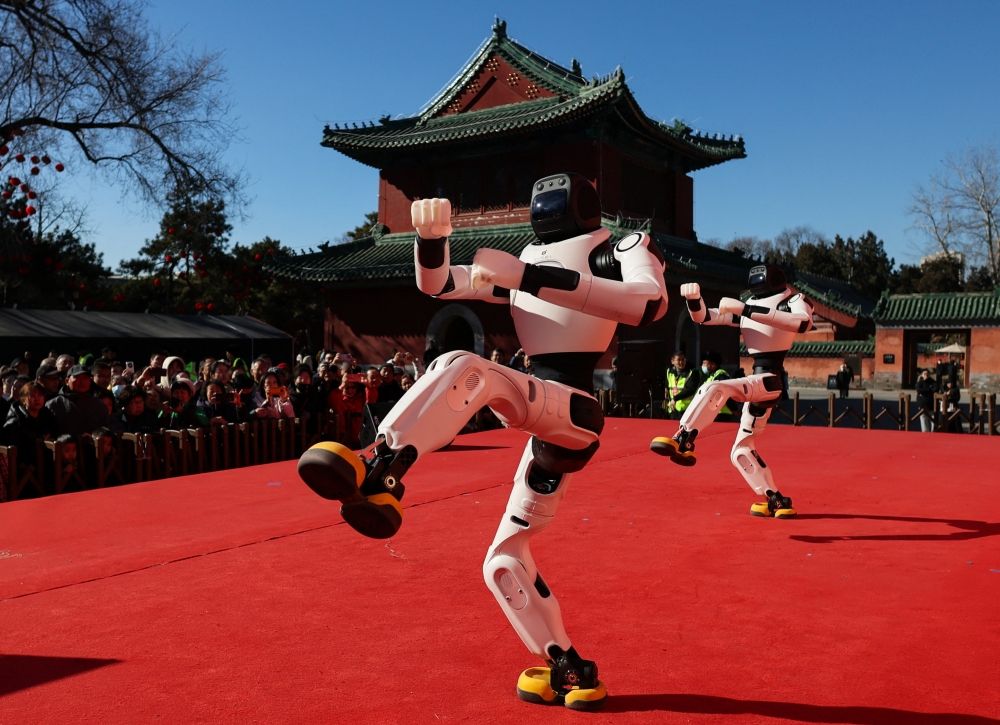
People watch as robots perform a dance during Lunar New Year celebrations marking the Year of the Horse, in Beijing February 18, 2026. — Reuters pic
How important is it?
In theory, the FYP functions as an evolving, adaptive framework, rather than a rigid blueprint, said Dylan Loh, an associate professor at Singapore’s Nanyang Technological University.
“While they set a stable long-term direction, they are designed with some flexibility to allow for adjustments based on internal and external shifts,” Loh told AFP.
Previous plans have been adhered to “quite closely” though, he said, even more so since Xi Jinping took power in 2013.
“The room for flexibility has somewhat closed a little” as barring drastic international or domestic developments, Xi expects the plans to be strictly implemented, he explained.
The FYP marks the start of a “policy cascade” which trickles down to dozens of sectoral, provincial, and local plans, said ASPI’s Lee.
“That entire pipeline, along with local executive capacity, determines real implementation.” — AFP
These were the details of the news Explainer: What is China’s Five-Year Plan and why does it shape the global economy? for this day. We hope that we have succeeded by giving you the full details and information. To follow all our news, you can subscribe to the alerts system or to one of our different systems to provide you with all that is new.
It is also worth noting that the original news has been published and is available at Malay Mail and the editorial team at AlKhaleej Today has confirmed it and it has been modified, and it may have been completely transferred or quoted from it and you can read and follow this news from its main source.