
Hello and welcome to the details of What are China’s Two Sessions and why does the 2026 meeting matter more than any in recent memory? and now with the details
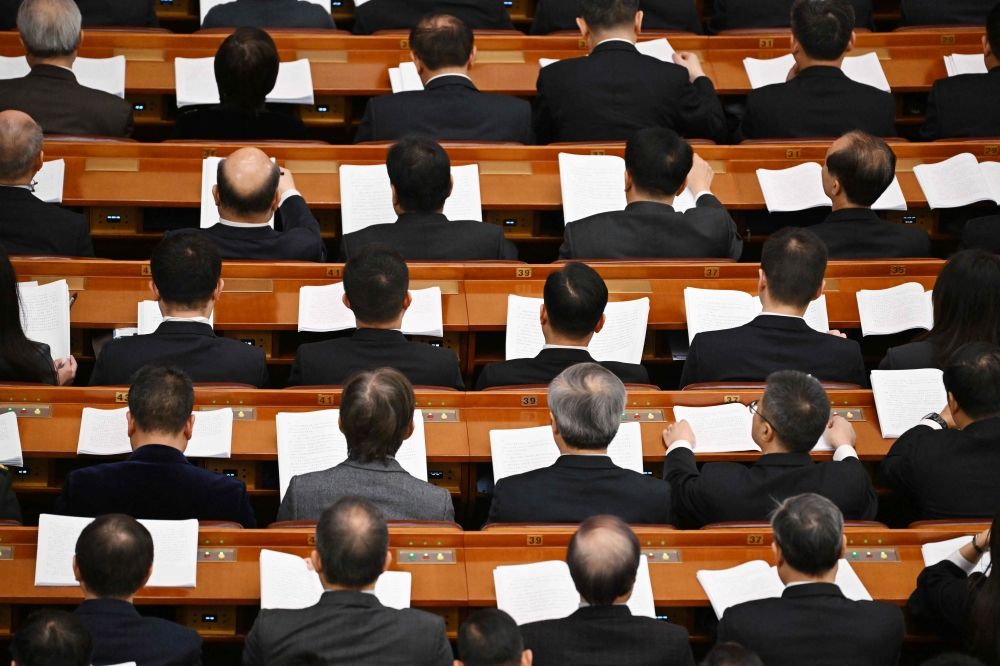
Nevin Al Sukari - Sana'a - Delegates attend a plenary session of the Chinese People’s Political Consultative Conference at the Great Hall of the People in Beijing on March 9, 2024. — AFP pic
- China's Two Sessions begin this week, with Premier Li Qiang set to unveil key economic targets amid rising US-China tensions.
- A new five-year plan (2026–2030) will be approved, prioritising AI, advanced manufacturing, and energy security to boost self-reliance.
- Defence spending is expected to rise ~7.2 per cent, reflecting Beijing's growing military assertiveness in the South China Sea and over Taiwan.
BEIJING, March 3 — China will kick off its annual legislative meetings known as the Two Sessions this week, drawing thousands of delegates from across the country to Beijing.
No major surprises are expected at the highly choreographed political conclave, as voting on legislation is usually pre-approved by the ruling Communist Party.
Still, China’s most significant political event will provide clues as to the priorities of top leaders, in the face of a precarious geopolitical landscape shaken by the volatile US President Donald Trump.
Here’s what you need to know:
What are the Two Sessions?
The Two Sessions meetings are simultaneous gatherings of China’s rubber-stamp parliament and a separate political advisory body.
The first session, starting Wednesday, is a gathering of China’s political advisory committee, the Chinese People’s Political Consultative Conference (CPPCC).
This is considered more of a low-stakes event, with representatives including experts, business leaders and even celebrities.
The CPPCC also includes people from Hong Kong, Macau and Taiwan.
China-watchers, however, will be focused on the meeting of the National People’s Congress (NPC), the country’s top legislature, beginning Thursday.
Communist Party members form a super-majority of the seats in the legislature.
Observers call it a “rubber-stamp” parliament as most bills passed have already been decided by party leaders beforehand.
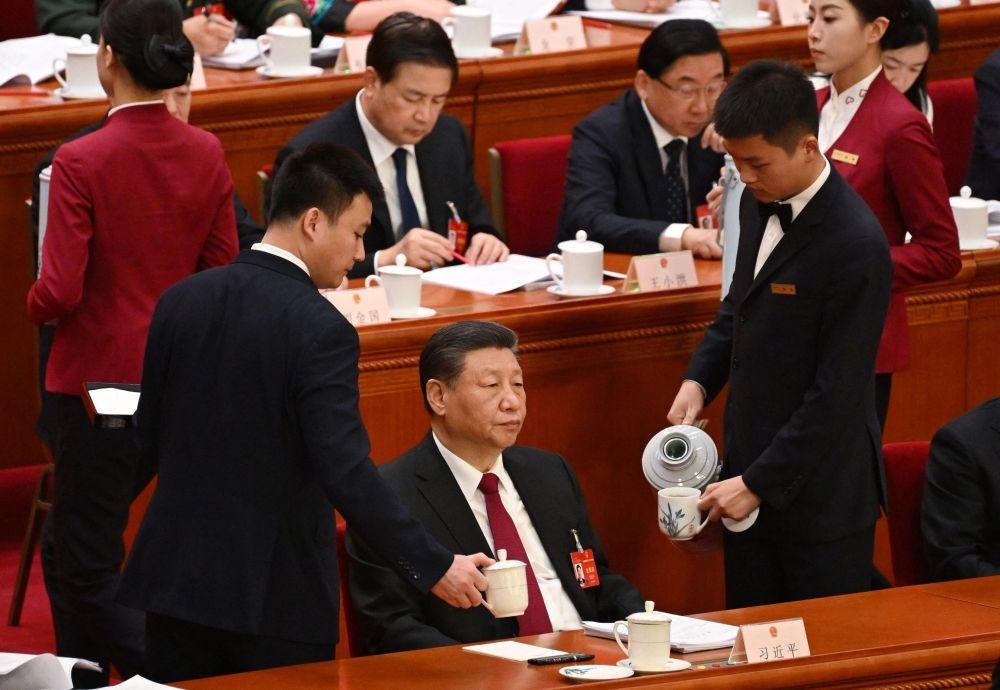
Workers replenish Chinese President Xi Jinping’s teacups during the opening session of the National People’s Congress at the Great Hall of the People in Beijing on March 5, 2024. — AFP pic
What are people looking out for?
The centrepiece is usually the NPC’s opening session, when Premier Li Qiang delivers a government work report – a speech expected to unveil key economic growth targets and outline steps to achieve them.
“Against a backdrop of strategic competition and global uncertainty, Beijing will continue emphasising domestic self-reliance alongside external resilience,” Asia Society Policy Institute (ASPI) analysts wrote in a note.
“This requires strengthening domestic demand, accelerating indigenous innovation, and diversifying export markets.”
China’s five-year plan (FYP), which maps out national development goals for 2026-2030, is expected to be approved by the NPC and published during this period too.
The plan will likely detail science and technology initiatives across fields including next-generation artificial intelligence, high-end manufacturing and industrial upgrading, energy and resource security, ASPI analysts wrote.
The plan would be significant in providing a glimpse into China’s view of “high quality” economic growth, including what advanced industries are doing well and what needs to be improved, said Lim Tai Wei, a professor and East Asia expert at Japan’s Soka University.
China is expected to announce its plans that same day to spend more on its military in its annual defence budget, as Beijing ramps up its presence in contested areas in the South China Sea and tensions persist around the self-ruled island of Taiwan.
Since 2023, China has hiked its defence spending by 7.2 per cent annually, and this year’s figure would likely be similar, Lim told AFP.
What can we expect?
The meetings will last for a week and mostly be held at Beijing’s opulent Great Hall of the People.
China will make extensive preparations to prevent any disruptive incidents from happening during the parliamentary sessions, with meticulous planning to showcase an image of political unity.
State media touts the sessions as proof of the party’s willingness to listen to its people, despite its monopoly on power.
The Two Sessions display China’s “whole-process people’s democracy in action”, the state news agency Xinhua said.
Heightened police presence and increased traffic control are anticipated in the lead-up to and during the event in Beijing.
Observers will still be watching for any unexpected moments or off-the-cuff statements made by top leaders during the tightly managed meetings at the Great Hall.
At a party congress held at the same venue in 2022, former leader Hu Jintao – Xi Jinping’s immediate predecessor – was unexpectedly led out of the closing ceremony in a moment captured by journalists that went viral outside of China.
This year is expected to be the third consecutive one without a press conference with the country’s premier – once a highlight of the closing session and where foreign media could pose questions to China’s number two official. — AFP
These were the details of the news What are China’s Two Sessions and why does the 2026 meeting matter more than any in recent memory? for this day. We hope that we have succeeded by giving you the full details and information. To follow all our news, you can subscribe to the alerts system or to one of our different systems to provide you with all that is new.
It is also worth noting that the original news has been published and is available at Malay Mail and the editorial team at AlKhaleej Today has confirmed it and it has been modified, and it may have been completely transferred or quoted from it and you can read and follow this news from its main source.