
We show you our most important and recent visitors news details How Iran’s next supreme leader will be chosen in the following article
Hind Al Soulia - Riyadh - TEHRAN — The death of Supreme Leader Ayatollah Ali Khamenei after nearly 37 years in power has triggered a constitutional succession process that will determine the future leadership of Iran.
Under Iran’s constitution, a temporary leadership council has been formed to assume the duties of the supreme leader until a permanent successor is appointed.
The interim council consists of the sitting president, the head of the judiciary and a member of the Guardian Council selected by the Expediency Council, which advises the supreme leader and mediates disputes with parliament.
Iran’s President Masoud Pezeshkian and judiciary chief Gholamhossein Mohseni Ejei are among those stepping in to temporarily assume leadership responsibilities.
While the council governs in the interim, Iran’s Assembly of Experts — an 88-member panel of Shiite clerics — is tasked with selecting the next supreme leader “as soon as possible,” in accordance with the law.
Members of the Assembly of Experts are elected every eight years, but their candidacies must first be approved by the Guardian Council, Iran’s constitutional watchdog body known for disqualifying candidates it deems unfit.
Deliberations over succession traditionally take place behind closed doors, making it difficult to predict who may emerge as a leading contender.
Related Article
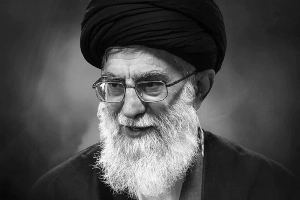
THE FALL OF KHAMENEI
In previous years, hard-line President Ebrahim Raisi had been viewed as a possible successor, but he was killed in a helicopter crash in May 2024.
Attention has since turned to Mojtaba Khamenei, the 56-year-old son of the late supreme leader.
A Shiite cleric, Mojtaba has never held formal government office, and a potential father-to-son succession could generate criticism both from reform-minded Iranians and from conservatives who oppose the appearance of dynastic rule.
Iran has experienced only one prior transition in the position of supreme leader.
In 1989, Grand Ayatollah Ruhollah Khomeini died after leading the 1979 Islamic Revolution and steering Iran through its eight-year war with Iraq.
Ayatollah Khamenei then assumed the role and consolidated power over the following decades.
The supreme leader holds ultimate authority within Iran’s political system, serving as commander-in-chief of the armed forces and the powerful Revolutionary Guard.
The position carries final say over major domestic and foreign policy decisions and sits at the center of Iran’s complex power structure.
These were the details of the news How Iran’s next supreme leader will be chosen for this day. We hope that we have succeeded by giving you the full details and information. To follow all our news, you can subscribe to the alerts system or to one of our different systems to provide you with all that is new.
It is also worth noting that the original news has been published and is available at Saudi Gazette and the editorial team at AlKhaleej Today has confirmed it and it has been modified, and it may have been completely transferred or quoted from it and you can read and follow this news from its main source.