Hello and welcome to the details of ‘We’re not for sale’: Americans reject data centre projects amid growing AI backlash and now with the details
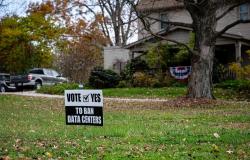
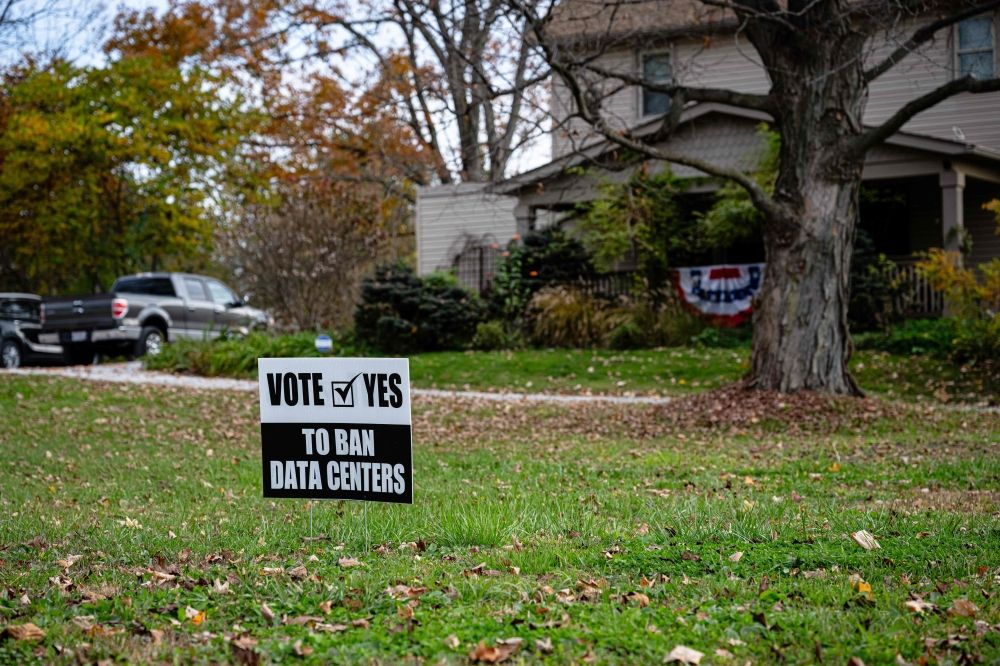
Nevin Al Sukari - Sana'a - A sign supporting the banning of data centres is seen outside of a home near the Meta Prometheus Campus, an AI data centre and supercluster project, is seen on November 1, 2026 in New Albany, Ohio. — Getty Images pic via AFP
NEW YORK, Nov 6 — Voters in dozens of American cities approved restrictions or outright bans on data centres during Tuesday’s midterm elections, in one of the clearest signals that a groundswell of anger over the AI boom has cut across political divides.
“Democrat, Republican, that didn’t matter,” said Alisha Lange, a farmer from Piqua, Ohio. “People want their town back.”
She was one of the driving forces behind the grassroots group Save Piqua, which advocated for a ban on data centres with a capacity of more than 25 megawatts, effectively ruling out any large-scale project.
The ban passed in a ballot measure on Tuesday and now jeopardises the construction of a data centre worth more than US$1 billion (RM4.04 billion) planned by Meta, even though the project had already been approved.
The 42-year-old farmer wept with joy when she learned that two-thirds of voters approved the measure.
“We’re just a little farm town, and we would much rather just have a cornfield or have some sort of industry that provides an income to a larger amount of people,” she said, referring to the relatively small number of jobs that data centres tend to create after they’re built.
While ballots are still being counted around the country, more than three dozen local measures have already passed that resulted in tighter regulations for data centres, according to consulting firm Redbud Consulting.
The outcomes add to restrictions already imposed by nearly 600 jurisdictions across the country, according to Electric Choice, including entire states in some cases, like New York and Texas.
Meta isn’t the only big tech company spending billions on data center construction — Google, Microsoft and Amazon are also investing heavily in an effort to meet growing demand for their AI products and services.
Last straw
In Ottawa, a small town near Kansas City, residents also overwhelmingly approved a ban on large data centres.
“We’re not for sale,” Michael Lewis said.
Lewis is a member of a grassroots organization called Ottawa United, and ran for Congress this cycle as a Democrat, though he lost on Tuesday to the incumbent Republican.
“You can dangle some money in our face, it doesn’t mean we’re going to give away our resources and deal with the environmental issues that stem from” data centres, he said.
In Janesville, Wisconsin, a majority of city council members were initially open to a proposal from developer Viridian, which was ready to put US$8 billion on the table to build a data center on a former General Motors site that closed in 2008.
But communities are starting to ask for more than job creation potential and total investment when scrutinising new construction projects.
“What we’re seeing now is that there is a much broader range of indicators that indicates a good project or a bad one,” Cathy Erdman, a member of Janesville for Responsible Development, said.
A project’s impacts on local tax streams, broader infrastructure, quality of life and other land uses “can be equal to or greater in importance than the number of jobs or just the dollar amount in capital investment,” Erdman said.
Under pressure, the city council ultimately rejected the Viridian project in June, then adopted a one-year moratorium, before a majority of voters on Tuesday backed new restrictions.
Any large-scale project on the former General Motors site must now be approved by referendum.
While some in Janesville went to the polls to express their outright opposition to data centres, others simply wanted “more transparency,” Erdman said.
“I believe that is the general consensus community-wide: that that project, in particular, was very poorly handled by the powers that be,” the 45-year-old activist said.
In Piqua, the Meta project was the last straw, Lange said, leading to the removal of two city council members and the mayor.
In Ottawa, Lewis will remember the data center protest joining forces across the political aisle with a Republican official to win a court order for a referendum.
“It was wonderful,” he said. “That was the true meaning of community right there.” — AFP
These were the details of the news ‘We’re not for sale’: Americans reject data centre projects amid growing AI backlash for this day. We hope that we have succeeded by giving you the full details and information. To follow all our news, you can subscribe to the alerts system or to one of our different systems to provide you with all that is new.
It is also worth noting that the original news has been published and is available at Malay Mail and the editorial team at AlKhaleej Today has confirmed it and it has been modified, and it may have been completely transferred or quoted from it and you can read and follow this news from its main source.