Hello and welcome to the details of Lula’s social programmes transformed lives in Brazil’s poorest state, but young voters want more and now with the details
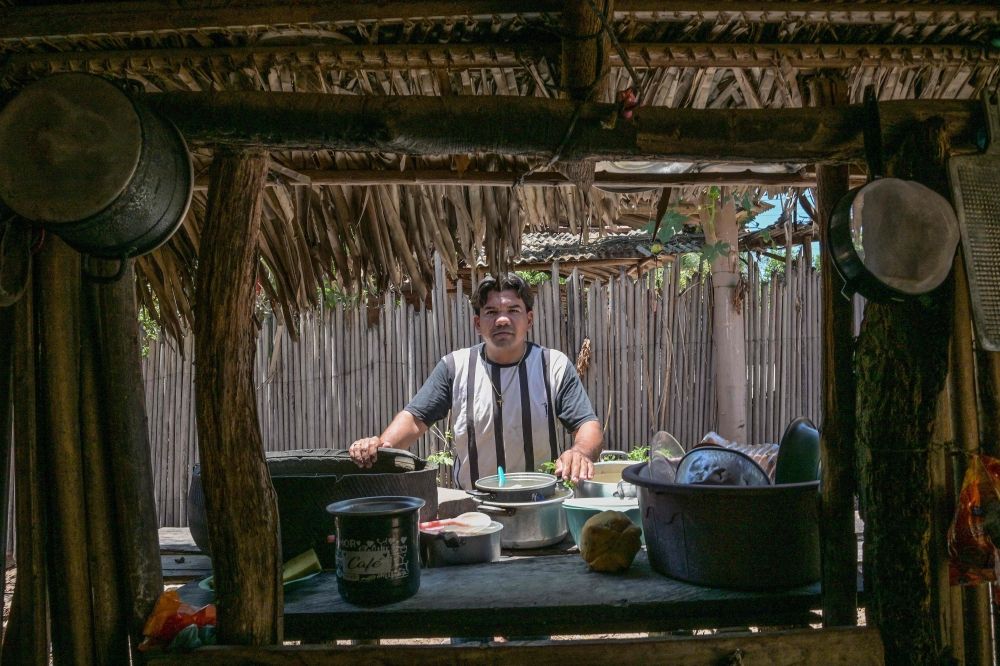
Nevin Al Sukari - Sana'a - Antonio Marcos do Nascimento de Lima poses at his home in the Padre Trindade settlement of the Landless Workers' Movement (MST), in Vargem Grande, Maranhao state, northeastern Brazil, on October 13, 2026. — AFP pic
VARGEM GRANDE, Oct 22 — The first time he ate his fill, Walter dos Santos was 25 years old and had long since watched siblings die of hunger in northeastern Brazil, where they grew up without electricity, education, or prospects.
He learned to read and write and finished high school at 32. Today, his daughter holds a doctorate in biotechnology and his son is an agronomist.
The 56-year-old, who lives in Maranhao state, credits one man: Brazil’s leftist President Luiz Inacio Lula da Silva.
Dos Santos said Lula was the “father and the mother and the grandfather” of Quilombo Piqui da Rampa—a traditional Afro-Brazilian community descended from enslaved people.
“Everything we were denied, our children can now have,” thanks to Lula’s social policies, he told AFP from his painted yellow house, a far cry from the mud-and-thatch-roofed structure he grew up in.
“Even if people call it handouts, for us they were an enormous help. Because anyone who has ever gone hungry knows not to take these programs for granted.”
His gratitude reflects Lula’s enduring appeal in Brazil’s vast Northeast, where he won nearly 64 percent of votes in a first-round election.
However, he lost over 250,000 votes compared to a 2022 election, which experts say is a sign voters are starting to look beyond social programs to improve their lives.
Nationally, Lula suffered a major blow as right-wing Senator Flavio Bolsonaro defied polls to come out ahead. The pair face a tight runoff on Sunday.
A little ball of rice
Maranhao stretches from the Amazon rainforest to the Atlantic coast, where turquoise lagoons shimmer between the sweeping white dunes of Lencois Maranhenses. Once a major exporter of sugar and cotton, its economy built on enslaved labor, the state is now Brazil’s poorest.
Residents in communities around the city of Vargem Grande told AFP that before Lula first came to power in 2003, theirs was a hardscrabble life of subsistence farming and working in exchange for sugar, tobacco or cachaca (a Brazilian spirit).
“Mom would cook a single kilo of rice to feed everyone. She’d just take a small portion—a little ball of rice—for herself to eat,” said Dos Santos, who was one of 16 children.
Thick groves of babassu palms cover the landscape, for generations providing backbreaking work for women, who crack open the plants’ nuts to extract seeds used to make oil.
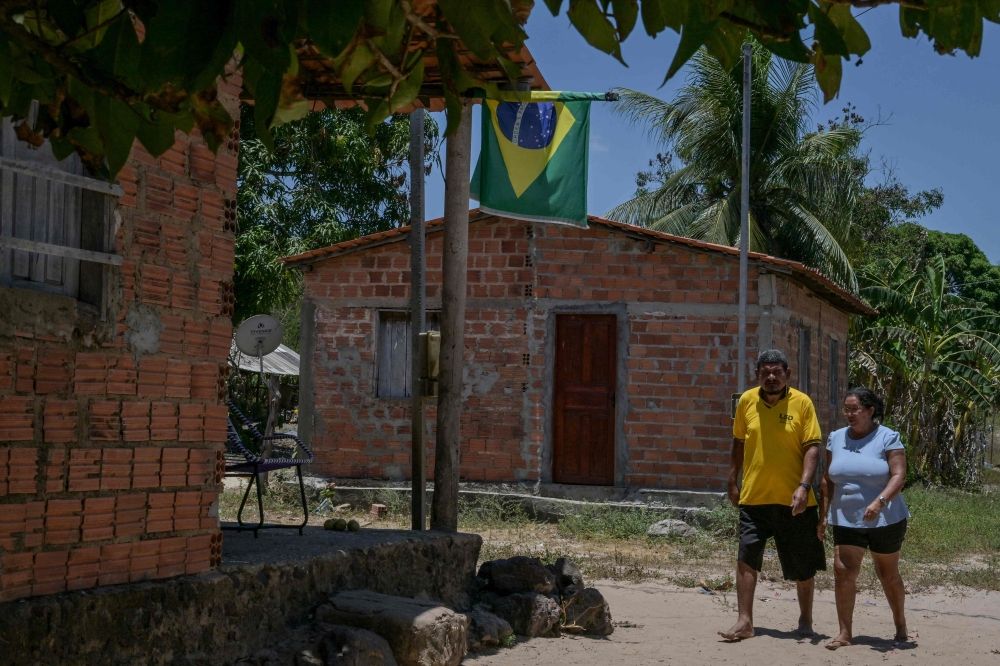
Residents of the region credit social programs championed by Brazilian President Luiz Inacio Lula da Silva with reducing poverty and expanding access to education, helping maintain his strong electoral support in Brazil's Northeast ahead of the presidential runoff election. — AFP pic
Maria de Fatima Mendes Ferreira, 54, who lives in the nearby Padre Trindade community, recalls losing her six-month-old baby—one of nine children—to malnutrition in her twenties.
“Back then, we didn’t eat properly. We worked all day long” cracking coconuts.
Her husband, fisherman Antonio Carlos Lima Ferreira, 51, said programs like Lula’s Bolsa Familia—which provides cash to low-income families who keep their children in school and vaccinated—had changed their life.
Lula “has a genuine love for the poor. That’s the crux of it.”
Programs that help locals sell their produce to the government, which in turn uses it to provide school meals and help families in need, have transformed these communities.
Beyond basic necessities
Vitor Hugo Miro, a researcher at the Brazilian Institute of Economics, said the poverty rate—below 775 reais ($154) a month—dropped from 67 percent to 49 percent in Maranhao between 2012 and 2025.
But he said economic opportunity and good jobs are limited, and people are increasingly worried about security as major criminal factions have expanded in the region.
While social programs have been crucial, “people are beginning to weigh other dimensions of their lives when deciding how to vote,” Miro said.
In the regional seaside capital Sao Luis, known for its colonial Portuguese architecture, crumbling tiled facades and cobbled streets, Larissa Bianque, 32, told AFP she was the only one in her family voting for Bolsonaro.
While much of her family depends on Bolsa Familia and other benefits, she said young people “aspire to something beyond just the aid that covers basic necessities.”
Quintessential Northeasterner
For Lula supporters, his life story growing up dirt poor is key to his appeal and gave a sense of pride to a region often mocked as backward and uneducated.
“He is the quintessential Northeasterner... yet he never forgot his roots,” said Zacarias Neto de Moraes, 58, a coordinator with Lula’s Workers’ Party (PT).
He spoke to AFP on the sidelines of a meeting discussing how to deal with a record abstention rate in the region.
“There is a segment of society made up of young people who never lived through the time before Lula. They don’t know what things were like back then,” he said. — AFP
These were the details of the news Lula’s social programmes transformed lives in Brazil’s poorest state, but young voters want more for this day. We hope that we have succeeded by giving you the full details and information. To follow all our news, you can subscribe to the alerts system or to one of our different systems to provide you with all that is new.
It is also worth noting that the original news has been published and is available at Malay Mail and the editorial team at AlKhaleej Today has confirmed it and it has been modified, and it may have been completely transferred or quoted from it and you can read and follow this news from its main source.