
Hello and welcome to the details of Austria’s headscarf ban faces backlash as Muslim girls say it infringes religious freedom and now with the details
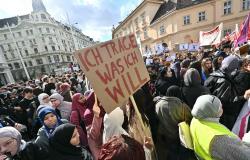
Nevin Al Sukari - Sana'a - A protester holds a placard reading "I wear what I want" during a demonstration against a headscarf ban in schools, on October 9, 2026 in Vienna, Austria. — AFP pic
VIENNA, Oct 15 — As the new school year gets under way in Austria, a headscarf ban for girls under 14 has sparked protests on the streets and in the classroom, with dozens of pupils refusing to comply.
Austria’s conservative-led government has insisted that the ban, introduced on September 1, promotes gender equality and protects Muslim girls from “segregation and oppression”.
But critics argue that it disproportionately targets Muslims, infringes upon religious freedom and is forcing young girls to dress in a way that makes them feel uncomfortable.
Since the ban took effect, education authorities across Austria have held 127 meetings with parents and filed 52 reports over alleged breaches of the law, according to the education ministry.
Opponents of the ban have also held protests across the country, with several hundred people gathering each time.
Part of me
At a demonstration in Vienna, Zehra, 37, who did not want to give her last name, said her two daughters, aged nine and 13, were “sad and angry” about the ban.
“We raise our children by telling them, you can decide who you want to be—and this law is the exact opposite,” she said.
Seham, 12, said she felt “afraid” to remove her headscarf at school “because I’d worn it for two years and it felt like a part of me”.
After discussions with school leaders, she said she was allowed to cover her hair with an alternative non-traditional head covering, but would still “rather wear the full headscarf”.
Roughly eight percent of Austria’s nine million residents are Muslim, according to 2021 government statistics.
They suffer the highest rates of racism and discrimination against Muslims in the EU, according to a 2024 report by Europe’s FRA rights agency.
In the 2024 elections, the far-right Freedom Party won for the first time even though it failed to form a government. The anti-immigration party continues to top voter opinion polls.
The new law is Austria’s second attempt to restrict headscarves in schools after a coalition between the conservatives and the Freedom Party introduced a ban for primary school pupils in 2019.
That law was overturned by the constitutional court on the grounds that a regulation targeting only Muslims was incompatible with religious neutrality.
Under pressure
The Islamic Religious Community in Austria, which is supporting legal action against the new headscarf ban, said it had received around 70 reports from families about difficulties during its implementation.
“A law that was justified as protecting children’s welfare is putting precisely those children under pressure at school,” the group said in a statement.
The constitutional court confirmed to AFP that it had received a legal complaint about the law and a decision is expected in the first half of 2027.
When girls refuse to comply with the law, schools are required to hold a series of discussions with pupils and their parents before cases are referred to education authorities.
Ultimately, parents who continue to ignore the ban can be fined.
In a statement sent to AFP, Education Minister Christoph Wiederkehr said the fact there had only been 127 meetings so far showed “that the vast majority of pupils and parents are cooperative”.
“In addition, the figures show that the discussions held with the parents concerned in the event of a violation are, for the most part, successful,” he added.
Education authorities in Vienna said that “on the basis of the discussions held so far, the impression has emerged that the girls wish to wear the headscarf of their own accord”.
Sandy, 12, said she began wearing a headscarf about a year ago because “I place a lot of importance on my religion and I want to be able to live it”.
A teacher who has worked with two affected girls in the capital told AFP there was no sign they were being forced to wear headscarves.
The girls had spent weeks adapting to the new rules and searching for acceptable alternatives to headscarves, said the teacher, who wished to remain anonymous. “It is very uncomfortable for them.” — AFP
These were the details of the news Austria’s headscarf ban faces backlash as Muslim girls say it infringes religious freedom for this day. We hope that we have succeeded by giving you the full details and information. To follow all our news, you can subscribe to the alerts system or to one of our different systems to provide you with all that is new.
It is also worth noting that the original news has been published and is available at Malay Mail and the editorial team at AlKhaleej Today has confirmed it and it has been modified, and it may have been completely transferred or quoted from it and you can read and follow this news from its main source.