
Hello and welcome to the details of India's Modi pushes plan to expand parliament and reserve seats for women, opposition protests and now with the details
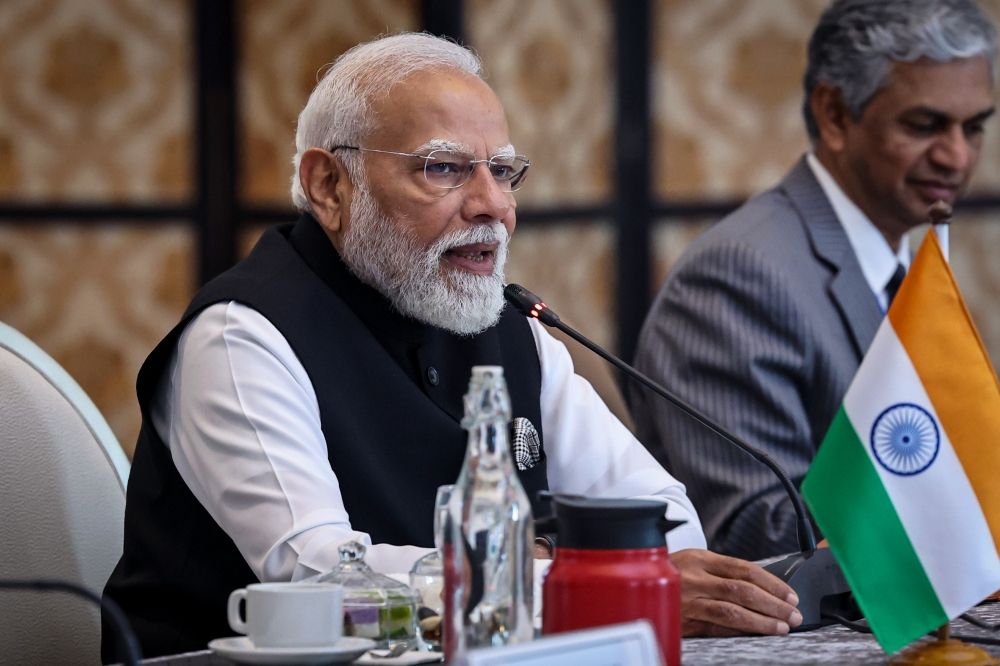
Nevin Al Sukari - Sana'a - Indian Prime Minister Narendra Modi’s Hindu nationalist Bharatiya Janata Party (BJP) draws much of its support from the densely populated north, and critics say expanding seats in parliament would therefore benefit it the most. — Bernama file pic
NEW DELHI, April 16 — India’s government was seeking to expand the size of parliament by two-fifths to increase representation of women lawmakers, but opposition parties have cried foul, saying it would benefit the ruling party.
“We’re set to take historic steps to empower women,” Prime Minister Narendra Modi said, ahead of the special sitting of parliament on Thursday, to debate constitutional amendments to both expand seats for women and the overall size of parliament to over 800.
The bill proposes fast-tracking implementation of a 2023 law in the world’s largest democracy of 1.4 billion people, reserving 33 per cent of seats for women.
Increasing the number of women in parliament has, in principle, broad cross-party support.
“We are all united to give rightful positions to women in India,” Parliamentary Affairs Minister Kiren Rijiju said today.
Women currently account for just 14 per cent of India’s 543 members of the Lok Sabha, the lower house of parliament.
To achieve the expansion, the government said it plans to redraw parliamentary boundaries based on population, a move that would increase the number of seats by nearly 40 per cent to more than 800.
Modi’s Hindu nationalist Bharatiya Janata Party (BJP) draws much of its support from the densely populated north, and critics say expanding seats in parliament would therefore benefit it the most.
Opposition parties, which control states in southern India where the population is lower, fear they would lose overall power in parliament.
Opposition leader Rahul Gandhi said that while his Congress party supports increasing the number of women in parliament, the government’s approach is aimed at consolidating power.
“The proposal that the government is now bringing has no connection to women’s reservation,” Gandhi said, in a statement on social media.
“It is merely an attempt to seize power through delimitation and gerrymandering.”
M.K. Stalin, chief minister of the southern state of Tamil Nadu, and a rival to Modi’s BJP, also opposed the plan.
“Let the flames of resistance spread across Tamil Nadu,” Stalin said, accusing the BJP of trying to marginalise the state through redrawn boundaries. “Let the arrogance of the fascist BJP be brought down,” he added on social media.
The bill requires a two-thirds majority to be passed, with three days of debate beginning on Thursday.
The government is proposing that delimitation of new seats be based on the last completed census, in 2011, and come into effect for the next general election in 2029.
But opposition parties want the government to wait for the results of an ongoing census, which was launched this month, a formidable logistical challenge that will take a year to carry out—and even longer for the data to be processed. — AFP
These were the details of the news India's Modi pushes plan to expand parliament and reserve seats for women, opposition protests for this day. We hope that we have succeeded by giving you the full details and information. To follow all our news, you can subscribe to the alerts system or to one of our different systems to provide you with all that is new.
It is also worth noting that the original news has been published and is available at Malay Mail and the editorial team at AlKhaleej Today has confirmed it and it has been modified, and it may have been completely transferred or quoted from it and you can read and follow this news from its main source.