Hello and welcome to the details of US ignites Iran war, but Gulf Arab states pay the price, Gulf sources say, as fallout spreads and now with the details
- Nevin Al Sukari - Sana'a - War exposes limits of US security guarantees, analysts warn
- Shakes assumptions about implicit trade-offs in US-Gulf ties
- Unease echoes disquiet over US inaction on 2019 attack on Saudi
- Hormuz disruption jolts oil markets, Gulf aviation, trade
Dubai, March 11 — The US may have pulled the trigger on the Iran war, but it is the oil-producing Gulf that will pay the price, Gulf sources and analysts say, signalling unease in ties between a region under Iranian attack and the superpower it relies on for protection.
Behind the scenes, resentment is mounting in Gulf Arab capitals at being drawn into a war they neither initiated nor endorsed but are now paying for economically and militarily, with airports, hotels, ports and military and oil installations hit by Iranian strikes, said three regional sources, who declined to be identified as they were not authorised to speak publicly.
“It is not our war. We did not want this conflict, yet we are paying the price in our security and our economy,” Ebtesam Al-Ketbi, President of the Emirates Policy Centre, told Reuters.
That doesn’t mean Iran is “innocent”, she said. Gulf governments had assured Tehran they would not allow their territories or airspace to be used by Washington in the war. Yet Iran has unleashed waves of drone and missile strikes across the region despite those assurances, denting business confidence in the process.
‘Injured lion’ post-war scenario is another Gulf worry
While disquiet about US President Donald Trump is growing over a conflict many believe he launched without consultation, some regional sources argue that having started the war, Washington should now see it through to eliminate what they see as a persistent Iranian threat on their doorstep.
“If America leaves the war now without achieving victory, it will be like abandoning an injured lion,” Ketbi said. “Iran will remain a threat to the region, capable of striking again. And if the regime collapses, leaving a power vacuum, neighbouring states will suffer the consequences.”
Asked for comment, the White House said US and Israeli strikes had reduced Iran’s retaliatory missile attacks by 90 per cent, “crushing their ability to shoot these weapons or produce more”.
White House spokeswoman Anna Kelly added that Trump was in close contact with Middle East partners and that Iran’s attacks on its neighbours underscore why the threat had to be eliminated.
There was no immediate response from Gulf states to requests for comment.
Iran’s Supreme Leader, Ayatollah Ali Khamenei, was killed on the first day of the war. Tehran responded by hitting Israel and Gulf states hosting US military installations, effectively halting oil and gas shipments through the Strait of Hormuz — a conduit for roughly a fifth of the world’s petroleum and LNG.
Across the region, airspace closures have resulted in airlines cancelling some 40,000 flights, the largest disruption to global air travel since the Covid-19 pandemic. Gulf tourism meanwhile is also taking a hit, putting at risk the region’s carefully crafted image as a safe and high-end vacation hotspot.
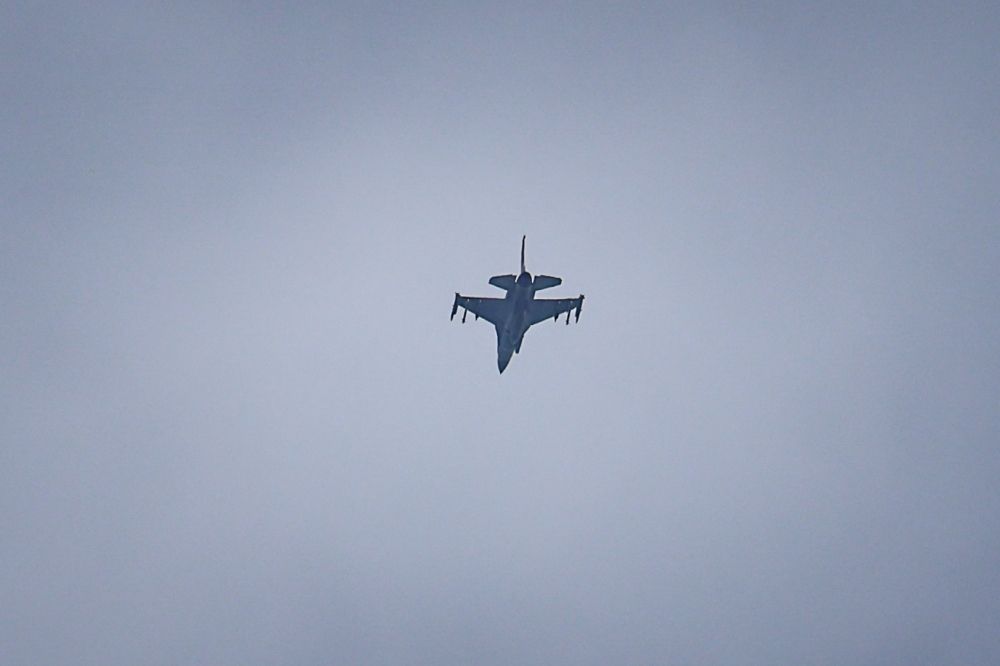
A United Arab Emirates Air Force F-16 fighter jet flies over Dubai on March 11, 2026. The Gulf countries have long been seen as islands of stability in the Middle East, but the war in the region could threaten their prosperity, analysts said, pointing to risks to their revenues and reputations as business havens. — AFP pic
Gulf states project resolve, reassess security
Amid the turmoil, Gulf states have sought to project calm and resolve. The president of the United Arab Emirates, Sheikh Mohammed bin Zayed Al Nahyan, said on Friday his nation was in a time of war but was well and told his enemies it was no easy prey, in his first public comments since Iran fired missiles at the UAE.
At the same time, analysts say the war has left Gulf states reassessing both their security dependence on Washington and the prospect of eventually engaging Tehran on new regional security arrangements—even as trust in Iran has collapsed.
For decades, relations between Washington and the Gulf states rested on an implicit trade-off: Gulf energy and capital—including hundreds of billions of dollars spent on US arms, advanced technology and goods and services—in return for US protection, said Fawaz Gerges of the London School of Economics.
Gerges said the war had shaken those assumptions. Now, he said, Gulf states would accelerate efforts to diversify their foreign and security partnerships, realising “they cannot really rely on the United States to protect their energy, oil, gas, their people and their sovereignty.”
The Gulf’s latest misgivings about Washington echo disquiet felt in Saudi Arabia at the US failure to retaliate against Iran after drone and missile attack in 2019 on the kingdom’s Abqaiq and Khurais oil facilities. Washington and Riyadh blamed the attacks on Tehran, which denied responsibility.
Abdulaziz Sager, Chairman of the Saudi-based Gulf Research Center, said Washington had failed to prepare safeguards for its regional allies or ensure oil and gas flows during wartime, saying the cost on the Gulf states’ economies is “horrendous”.
Businessman decries ‘dragging the gulf into a conflict’
Sager said the war had demonstrated the limits of relying solely on external security guarantees, particularly from the United States, adding that Gulf countries need to strengthen their own defence capabilities and prepare for future crises.
“External powers also tend to make decisions based on their own strategic interests rather than those of the Gulf. As a result, Gulf states will likely pursue a more cautious and balanced approach in their relations with both Iran and major international partners,” added Sager.
In a rare public rebuke, prominent Emirati businessman Khalaf Al Habtoor questioned the objectives of the US-Israeli war on Iran.
“If the strikes were aimed at containing Iran, did they take into account the regional consequences—or was the cost of dragging the Gulf into a conflict it was not party to simply ignored?” said Al Habtoor, founder of the Al Habtoor Group.
Saudi Aramco CEO Amin Nasser warned yesterday that continued disruption to shipping through Hormuz would have “catastrophic consequences” for oil markets.
Iran’s Revolutionary Guards, however, said they would not allow “one litre of oil” to be shipped from the Middle East if US and Israeli attacks continued. Trump has warned Washington would strike Iran harder if it blocked oil exports.
Sources close to Gulf Arab government circles say frustration with Trump privately runs deep across the region. Many believe he dragged the Gulf into a war shaped heavily by Israel, without sharing a plan and acting hastily and without fully weighing the political and economic fallout for allies.
One Gulf source familiar with US policymaking said key decisions were crafted by a small inner circle around Trump operating largely outside traditional US policy channels.
“They are businessmen and dealmakers, not career policymakers,” the source said, adding this approach left Gulf partners exposed to the consequences of this circle’s decisions. — Reuters
These were the details of the news US ignites Iran war, but Gulf Arab states pay the price, Gulf sources say, as fallout spreads for this day. We hope that we have succeeded by giving you the full details and information. To follow all our news, you can subscribe to the alerts system or to one of our different systems to provide you with all that is new.
It is also worth noting that the original news has been published and is available at Malay Mail and the editorial team at AlKhaleej Today has confirmed it and it has been modified, and it may have been completely transferred or quoted from it and you can read and follow this news from its main source.