Hello and welcome to the details of Nepal at a crossroads: Youth and veterans vie for power ahead of March polls and now with the details
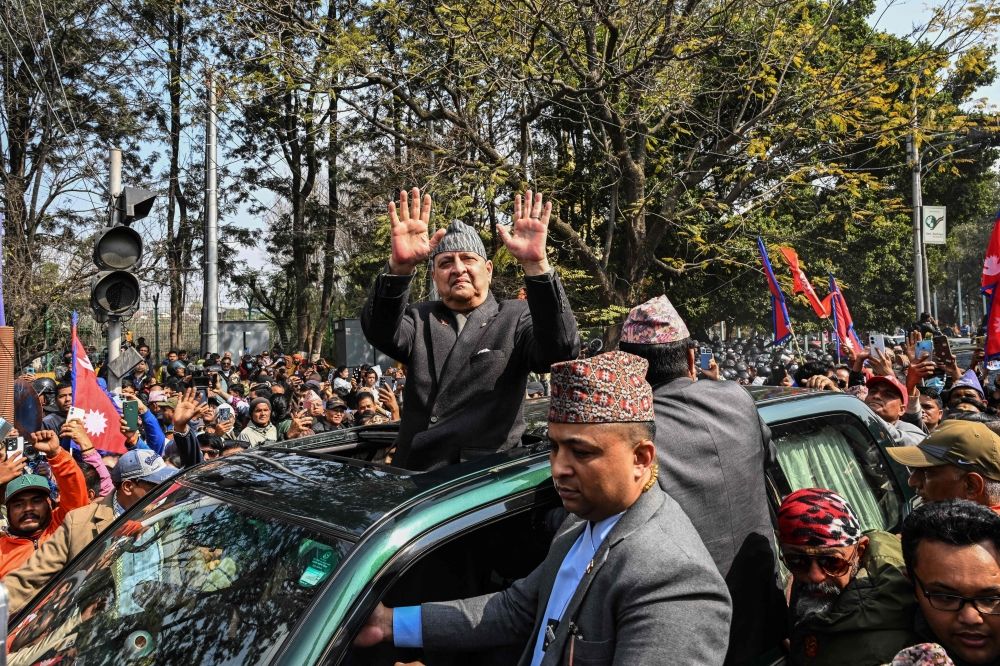
Nevin Al Sukari - Sana'a - Nepal’s former King Gyanendra Bir Bikram Shah Dev (centre) greets his supporters upon his arrival at the Tribhuwan International Airport in Kathmandu on February 13, 2026. — AFP pic
- Nepal will vote on March 5 to elect a new 275‑seat House of Representatives following youth-led anti-corruption protests.
- Veteran leaders like K.P. Sharma Oli and Pushpa Kamal Dahal face challengers including Gen Z activists and media personalities such as Rabi Lamichhane and Balendra “Balen” Shah.
- Economic hardship, overseas remittances, and regional influence from India and China make the vote closely watched, with young voters pushing for reform.
KATHMANDU, Feb 16 — Nepal goes to the polls on March 5 to elect a new parliament, following youth-led anti-corruption protests in September 2025 that toppled the government.
The official campaign period begins on Monday.
In the aftermath of the unrest, former chief justice Sushila Karki, 73, was appointed interim prime minister to lead the Himalayan republic of 30 million people to elections.
Her name was first proposed by thousands of young activists via the online platform Discord.
Karki will step down after the vote for the 275‑seat House of Representatives, the lower chamber of parliament, with 165 members elected directly and 110 through party lists.
Here are the key players in an election that many young Nepalis hope will usher in new leadership.
Old guard
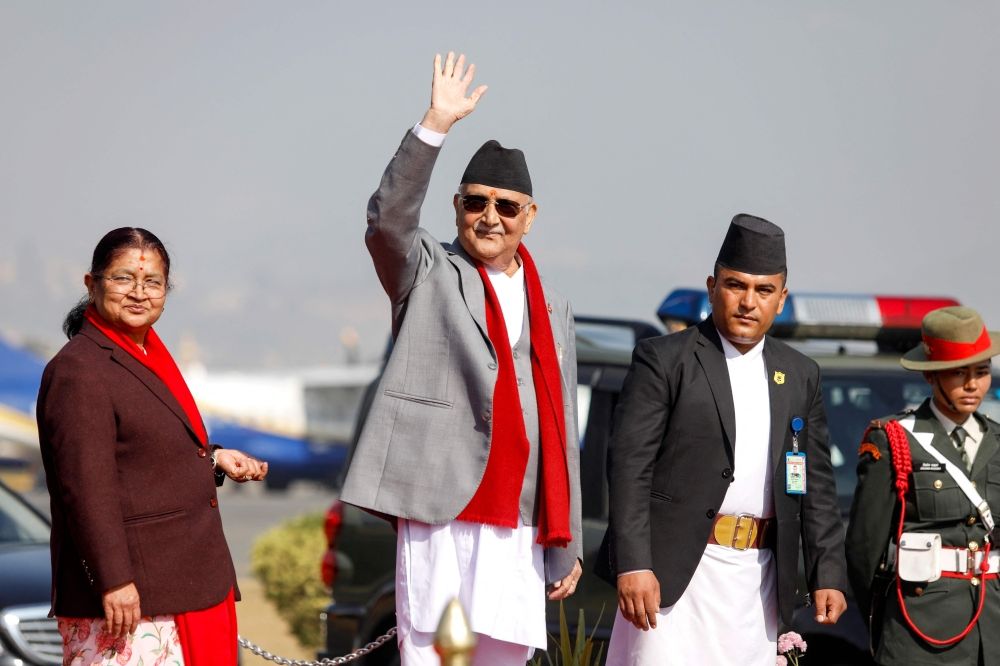
File picture of Nepal’s Prime Minister Khadga Prasad Sharma Oli (2nd left) waving alongside his wife Radhika Shakya (left) before his departure, at the Tribhuvan International airport in Kathmandu on December 2, 2024. — AFP pic
For nearly two decades, Nepal’s political landscape has been dominated by veteran leaders — many of them former Maoist insurgents — who have taken turns in power since the end of the 10‑year civil war in 2006.
K.P. Sharma Oli, 73, was ousted as prime minister by the uprising, but retained enough support to be re-elected leader of the Communist Party of Nepal–UML (Unified Marxist Leninist).
Another former prime minister, Pushpa Kamal Dahal, 71, heads the Nepal Communist Party, which has roped in several other communist factions since the protests.
Nepali Congress, the country’s oldest party and a member of the former coalition government under Oli, elected 49‑year‑old Gagan Thapa as its new leader in January — sidelining its veteran chief, five‑time prime minister Sher Bahadur Deuba, 79.
Ex‑king Gyanendra Shah, 78, deposed in 2008, ending 240 years of monarchy — still resides in Kathmandu and retains pockets of support from the Rastriya Prajatantra Party (RPP), which benefits from nostalgia and public frustration at mainstream politics.
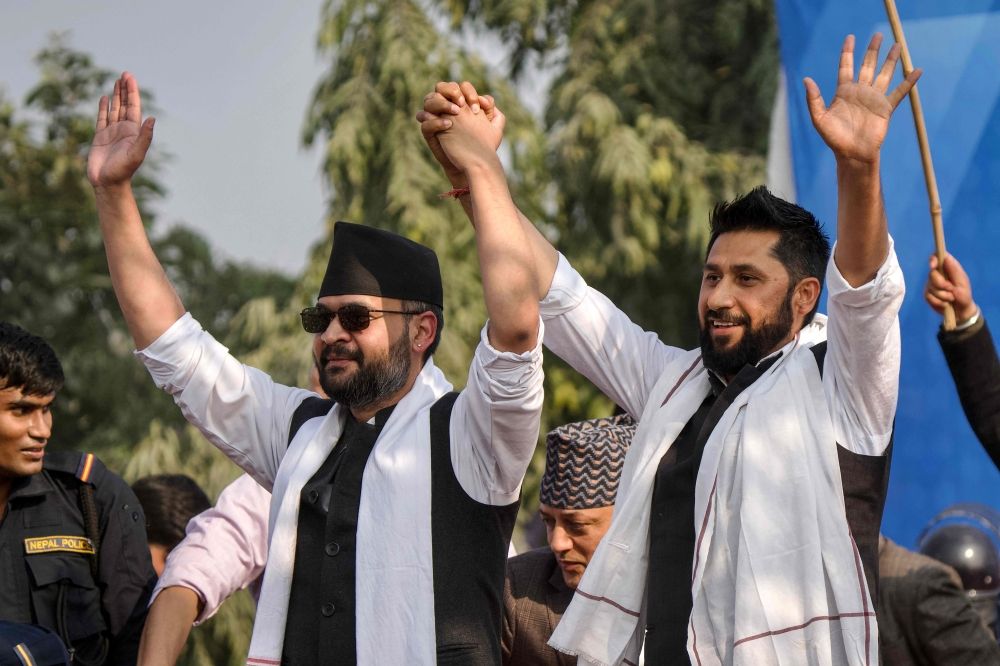
File picture of Rastriya Swatantra Party (RSP) election candidate and Kathmandu’s former mayor Balendra Shah (left) and party chairman Rabi Lamichhane together raise their arms during a campaign rally in Janakpur on January 19, 2026. Better known simply as Balen, Nepal’s rapper-turned-mayor is preparing for the biggest fight of his political life — a head-to-head battle with veteran leader KP Sharma Oli for March 5 elections in the former prime minister's own constituency. — AFP pic
Youth appeal
They face a host of challengers.
Television host Rabi Lamichhane, 50, leads the Rastriya Swatantra Party (RSP), which stunned observers in 2022 by becoming parliament’s fourth-largest force.
A former deputy prime minister and home minister, Lamichhane has formed an alliance with former Kathmandu mayor Balendra “Balen” Shah, 35 — a rapper and civil engineer with a considerable online following.
Shah is the alliance’s candidate for prime minister and is mounting a direct challenge against Oli in his constituency.
Another high‑profile contender is Kulman Ghising, the former interim energy minister credited with tackling chronic power outages when he led the Nepal Electricity Authority.
Gen Z
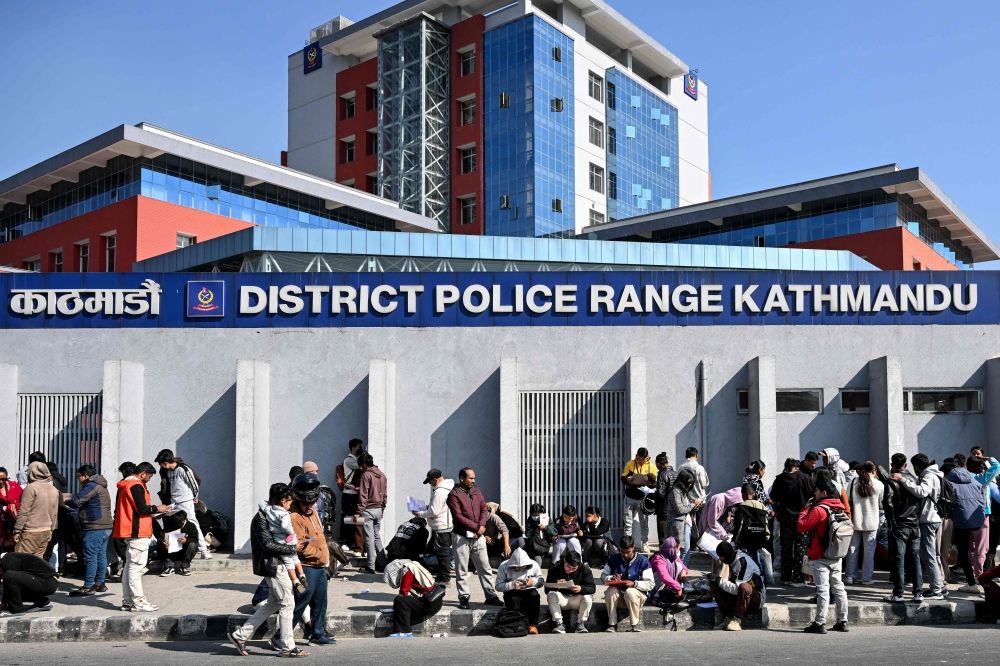
Nepali youth queue to submit applications for temporary police personnel for the upcoming general elections outside the District Police Range office in Kathmandu on January 11, 2026. — AFP pic
A new cohort of first‑time candidates has emerged from the loosely organised Gen Z movement that helped drive the September protests.
Young Nepalis are seeking leaders who promise economic reform.
The World Bank estimates 82 per cent of Nepal’s workforce is in informal employment, with GDP per capita at $1,447 in 2024.
Sudan Gurung, another key figure among the Gen Z protesters, is contesting, along with other young activists.
International influence
Economic hardship has pushed millions of Nepalis to work abroad, with 7.5 per cent of the population living overseas, according to the latest census.
Although the diaspora cannot vote this time due to logistical constraints, it wields significant influence.
Remittances account for roughly a third of Nepal’s GDP.
The vote will be closely watched as landlocked Nepal lies between rivals India and China, both keen to maintain influence in Kathmandu. — AFP
These were the details of the news Nepal at a crossroads: Youth and veterans vie for power ahead of March polls for this day. We hope that we have succeeded by giving you the full details and information. To follow all our news, you can subscribe to the alerts system or to one of our different systems to provide you with all that is new.
It is also worth noting that the original news has been published and is available at Malay Mail and the editorial team at AlKhaleej Today has confirmed it and it has been modified, and it may have been completely transferred or quoted from it and you can read and follow this news from its main source.