
Hello and welcome to the details of Coordinated Indian AI disinformation, including ‘Hindu genocide’ claims, threatens Bangladesh elections and now with the details
Nevin Al Sukari - Sana'a - Bangladesh voters will hit the ballot box on February 12, 2026 and analysts and fact-checkers say a worrying 90 per cent of disinformation about the country comes from India, where its former prime minister Sheikh Hasina fled to after the 2024 uprising. — AFP pic
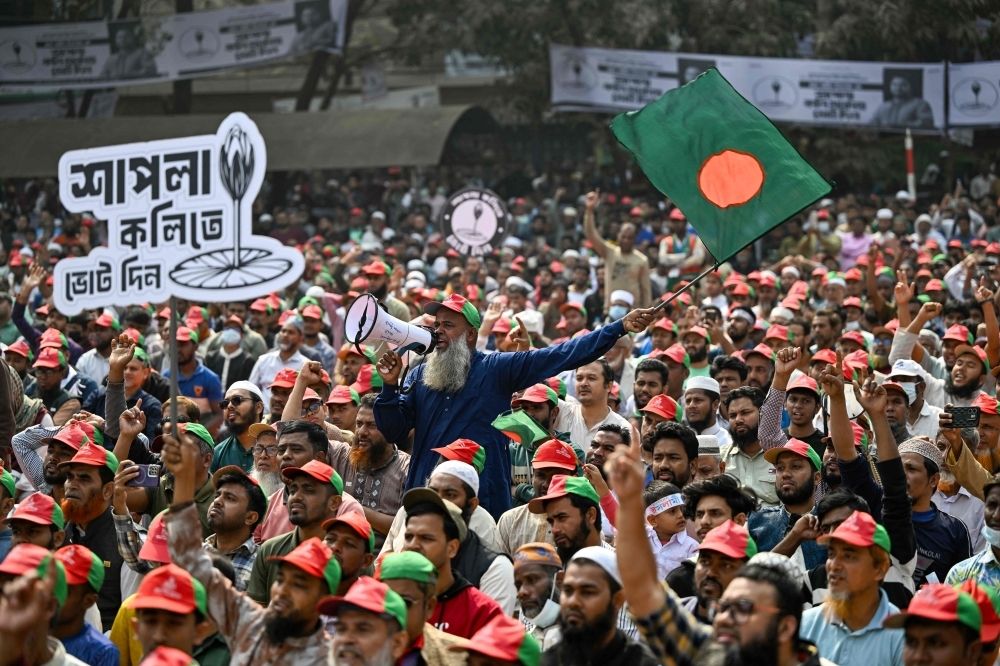
DHAKA, Feb 9 — Voters in Bangladesh elect a new government on February 12, but analysts warn their choice is threatened by a coordinated surge of disinformation, much of which originates from neighbouring India.
The Muslim-majority nation of around 170 million people is preparing for its first election since a 2024 student-led uprising toppled Sheikh Hasina – who fled to neighbouring India, where she has been hosted since by the Hindu-nationalist government.
Authorities say the scale of online manipulation – including sophisticated AI-generated images – has become so severe that a special unit has been created to curb false content.
Interim leader and Nobel Peace Prize winner Muhammad Yunus said in January that there had been a “flood of misinformation surrounding the elections” when he called UN rights chief Volker Turk seeking help.
“It is coming from both foreign media and local sources,” he said.
Much of that centres around claims of attacks against Bangladesh’s minorities – around 10 per cent of Bangladesh’s population is non-Muslim, most of them Hindu.
That has seen a mass posting of claims online that Hindus are under attack, using the hashtag “Hindu genocide”.
According to police figures released in January, out of 645 incidents involving members of minority groups in 2025 – only 12 per cent were classified as having a sectarian motive.
‘Coordinated Indian disinformation’
The US-based Center for the Study of Organized Hate said it had tracked more than 700,000 posts – generated by more than 170,000 accounts on X, that made claims of a “Hindu genocide” between August 2024 and January 2026.
“We have tracked coordinated Indian disinformation online, falsely alleging large-scale violence against Hindus in Bangladesh,” said Raqib Naik, head of the think tank.
“More than 90 per cent of this content originated from India, with the remainder linked to associated Hindu nationalist networks in the UK, US, and Canada,” he told AFP.
Examples debunked by AFP Fact Check, some of them shared tens of thousands of times, include an AI-created video of a woman who had lost her arm, appealing not to vote for the Bangladesh Nationalist Party (BNP), seen by many as a frontrunner.
In another computer-generated video, a Hindu woman alleges that people who follow the same religion have been told to vote for Jamaat-e-Islami, the key Islamist party, or they will be exiled to India.
Of the hundreds of AI-generated videos documented by AFP Fact Check teams on social media platforms – YouTube, Facebook, TikTok and Instagram – few are marked with an AI disclaimer.
The surge has also come after years of repression under Hasina, when opposition was crushed and outspoken voices silenced.
“We are noticing a huge amount of fake information compared to other times,” said Miraj Ahmed Chowdhury, head of the Dhaka-based research organisation Digitally Right, saying free AI tools made creating sophisticated fakes easier.
In another AI-generated video, Bangladeshis appear to praise Hasina – now a fugitive who was sentenced to death in absentia for crimes against humanity.
In India, social media outrage by Hindu fundamentalists about the lone Bangladeshi cricket player in India’s domestic IPL league resulted in his club cancelling his contract – a furore that escalated to Bangladesh’s national team pulling out of this month’s T20 World Cup in India.
But while analysts say much of the disinformation originates from India, there is no evidence that the large-scale media posts were organised by the government.
New Delhi’s foreign ministry say they have recorded a “disturbing pattern of recurring attacks on minorities” by “extremists in Bangladesh”, but also emphasise they have “consistently reiterated our position in favour of free, fair, inclusive and credible elections”.
‘Big threat’
Bangladesh Election Commission spokesman Md. Ruhul Amin Mallik said they were working with Facebook’s parent company, Meta, and set up a unit to monitor social media posts – but coping with the sheer volume online is a never-ending task.
“If our team detects any content as harmful and misleading, we instantly announce it as fake information,” Mallik said.
Election expert Jasmine Tuli, a former election commission official, said that AI-generated images carried an extra risk for Bangladesh.
More than 80 per cent of urban households have at least one smartphone, and nearly 70 per cent of rural areas, according to government statistics -- but many people are still relatively new to the technology.
“It is a big threat for a country like Bangladesh, since people don’t have much awareness to check the information,” Tuli said.
“Due to AI-generated fake visuals, voters get misguided in their decision.” — AFP
These were the details of the news Coordinated Indian AI disinformation, including ‘Hindu genocide’ claims, threatens Bangladesh elections for this day. We hope that we have succeeded by giving you the full details and information. To follow all our news, you can subscribe to the alerts system or to one of our different systems to provide you with all that is new.
It is also worth noting that the original news has been published and is available at Malay Mail and the editorial team at AlKhaleej Today has confirmed it and it has been modified, and it may have been completely transferred or quoted from it and you can read and follow this news from its main source.


