Hello and welcome to the details of After US airstrikes in Nigeria, violence surges and raises questions about Washington’s strategy and now with the details
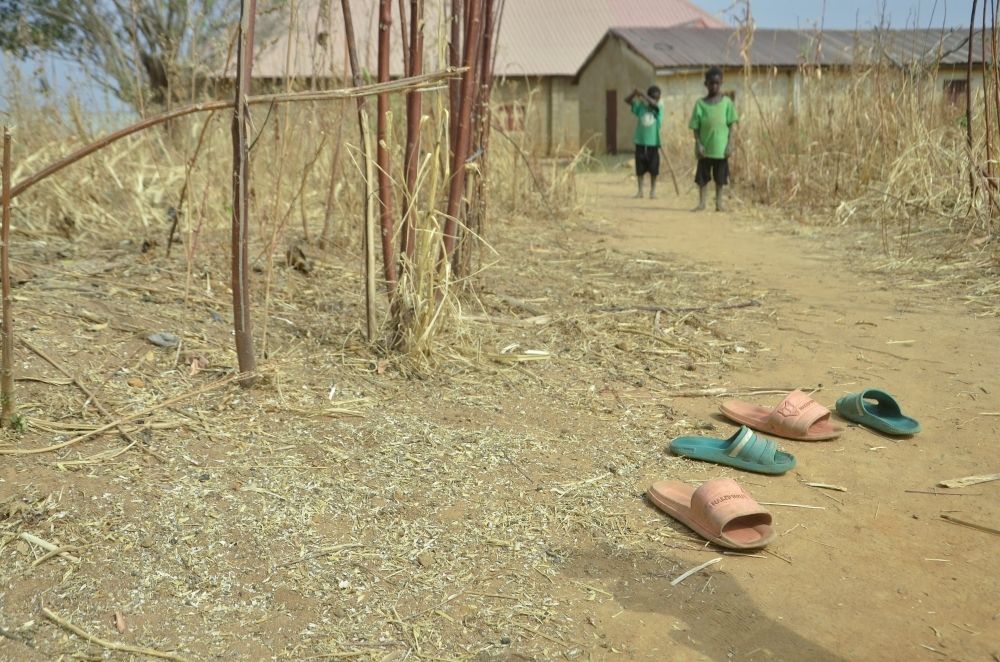
Nevin Al Sukari - Sana'a - Items belonging to survivors near the Haske Cherubim and Seraphim Movement Church, after an attack by gunmen in which dozens of worshippers were kidnapped, in Kurmin Wali, Kaduna, Nigeria, January 20, 2026. — Reuters pic
ABUJA, Jan 27 — Just over a week after the United States launched strikes targeting militants in Nigeria on Christmas Day, a roadside bomb ripped through an armoured troop carrier, killing at least eight Nigerian soldiers.
Then, days ahead of a high-profile US-Nigeria security meeting in Abuja last week, armed gangs kidnapped more than 170 churchgoers in Nigeria’s northern Kaduna state.
Elsewhere, a suicide bomber hit a military convoy killing half a dozen troops.
Violence has continued unabated despite US President Donald Trump’s stated goal of stemming the alleged mass killing of Christians in Africa’s most populous nation.
Security analysts say this is unsurprising.
“It would take a lot more than... a couple of bombardments to address Nigeria’s security challenges,” said Kabir Adamu of Beacon Security and Intelligence, calling for “a holistic approach” addressing “mass poverty”, “weak state governance structures” and jihadist financing networks.
Game changer?
The United States hit Nigeria’s north-west Sokoto state on Christmas Day in jointly coordinated strikes against Islamic State militants, the first direct action by Washington in the country.
Going forward, the United States will provide intelligence from aerial reconnaissance flights to aid Nigerian air strikes.
How much of a game changer that will be remains to be seen.
US support since Nigeria’s 2009 jihadist uprising has not stopped the bloodshed.
A US$346 million (RM1.4 billion) weapons sale last year was met with concern from advocates worried about the Nigerian military’s grim rights record — which had at times held up previous US arms sales.
US military efforts in the wider Sahel have failed to halt jihadist insurgency across Burkina Faso, Niger and Mali although the security situation has deteriorated since US and French troops left the region.
Nigerian national security adviser Nuhu Ribadu said increased collaboration with the US had “resulted in the neutralisation of several hundreds of terrorists.”
AFP was unable to confirm those numbers as Nigeria’s front lines are spread across vast swathes of unsecured rural terrain. Lately the military has been claiming that dozens of jihadists were killed in anti-terror operations.
Neither the US nor Nigeria has released details of how many militants were killed in the Christmas Day strikes.
“Regardless of how many ISIS members were killed, it allowed the Nigerian security forces the opportunity to hit more transitory targets” as the insurgents fled, Lieutenant General John Brennan, deputy commander of the United States Africa Command, told AFP.
Future cooperation would involve “the whole gamut of intel sharing, sharing... tactics, techniques, and procedures, as well as enabling (Nigeria) to procure more equipment,” he said.
Christians at risk?
Both militaries seem keen on the increased collaboration, even if diplomats are clashing over Trump’s rhetoric alleging the violence amounts to the “genocide” or persecution of Christians.
Independent analysts reject that, saying the overlapping security crises claim the lives of both Muslims and Christians, often without distinction.
None of Nigeria’s armed groups have publicly said they are targeting Christians in response to Trump’s comments, as some analysts worried might happen.
But a series of mass kidnappings and a slew of attacks on Christians in the northeast by the Islamic State West Africa Province have some researchers on edge.
“There were already many violent attacks against Christians before the strikes,” said James Barnett, a PhD candidate at University of Oxford specialising in Nigerian conflict.
“But it has also been a very violent period since... So we can say at minimum that the US air strikes didn’t fundamentally help.”
Dozens of schools remain closed across the north of the country following a mass kidnapping of pupils at St. Mary’s, a Catholic school in Niger state.
More than 250 students and staff were abducted in November, at the height of the diplomatic dispute between Abuja and Washington over Trump’s rhetoric.
Nigeria and the United States have largely reconciled. The students have been released.
But they remain out of the classroom — it’s been too dangerous for St. Mary’s to re-open. — AFP
These were the details of the news After US airstrikes in Nigeria, violence surges and raises questions about Washington’s strategy for this day. We hope that we have succeeded by giving you the full details and information. To follow all our news, you can subscribe to the alerts system or to one of our different systems to provide you with all that is new.
It is also worth noting that the original news has been published and is available at Malay Mail and the editorial team at AlKhaleej Today has confirmed it and it has been modified, and it may have been completely transferred or quoted from it and you can read and follow this news from its main source.