Hello and welcome to the details of ‘Byzantine, time-consuming processes’: Renee Good case highlights why suing ICE agents is so difficult in the US and now with the details
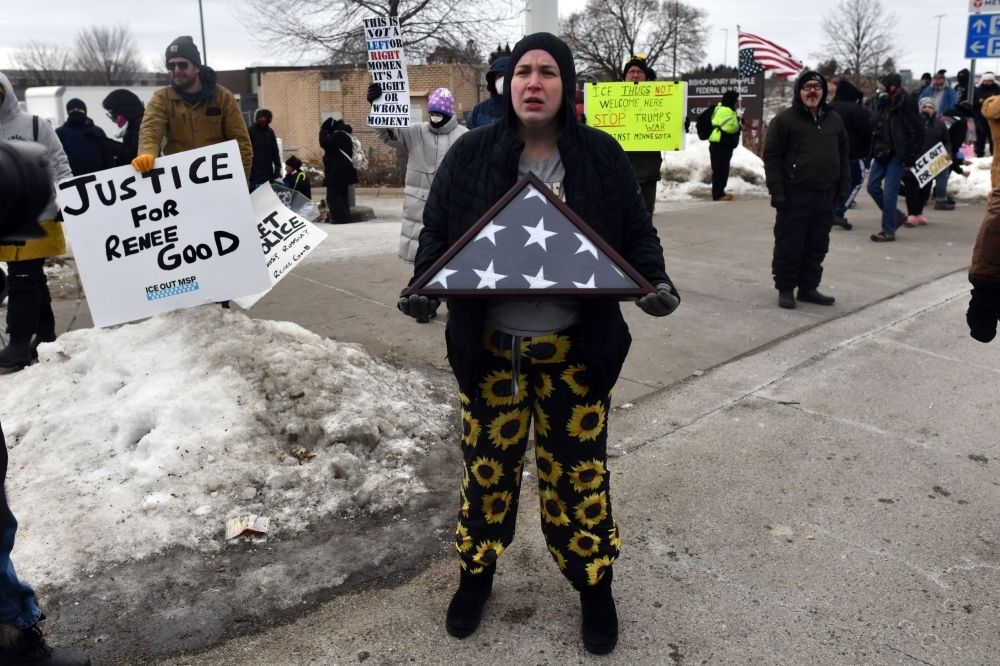
Nevin Al Sukari - Sana'a - Protesters participate in an anti-ICE demonstration outside the Bishop Whipple Federal Building in Minneapolis, Minnesota, on January 15, 2026. — AFP pic
(New users only) Unlock 4%* + 10%* p.a. promo rate for 3 months and enjoy FREE RM10 & when you sign up using code VERSAMM10 with min. cash of RM100 today! T&Cs apply.
WASHINGTON, Jan 17 — Lawyers representing the family of Renee Good, the woman killed by a US Immigration and Customs Enforcement agent in Minneapolis last week, announced on Wednesday they were exploring bringing a civil claim over her death.
The lead counsel hired by Good’s relatives, Antonio Romanucci, said suing the federal government would be a complex undertaking involving “byzantine, time-consuming processes.”
Does the law allow people to sue ICE agents?
US law makes it very difficult to sue federal agents as individuals. But victims can sue the federal government for compensation when its employees cause financial or bodily injury in the course of their work.
This is covered by the Federal Tort Claims Act of 1946, an exception to a legal doctrine called sovereign immunity which usually shields the federal government from lawsuits.
In a FTCA case, a plaintiff typically alleges a government employee acted negligently or wrongfully.
The statute might apply, for example, if an ICE agent damaged vehicles during an enforcement action. The statute would also allow family members of someone killed by ICE to seek compensation for wrongful death.
Several FTCA cases in the last year have drawn attention to the relatively obscure statute, which allows suits by citizens and non-citizens.
Jessie Fuentes, an elected official in Chicago who was handcuffed by ICE agents last year, recently used the FTCA to seek US$100,000 (RM406,250) in damages over the incident. That claim is pending.
Mahmoud Khalil, a Columbia University activist detained by ICE, and a Venezuelan man sent by US authorities to a Salvadoran megaprison also have brought FTCA claims.
What hurdles do these cases face?
While the FTCA opens a rare avenue for a lawsuit against the federal government, these claims face limits and obstacles, and legal experts generally consider the law a weak mechanism for addressing government officials’ misconduct.
Plaintiffs cannot seek punitive damages and do not have the right to a jury trial. Awards are also capped by the laws of the state where the wrongdoing occurred.
So, compensation can often be much lower than in traditional civil liability cases.
Additionally, the government cannot be held liable for discretionary judgments made by federal employees.
That means the government can defeat a claim by showing federal workers had to make judgment calls rather than follow standard procedures.
The government can also win by convincing a judge that the employee’s actions were reasonable. In Good’s case, the government would likely argue that the ICE agent who killed her acted in self-defence.
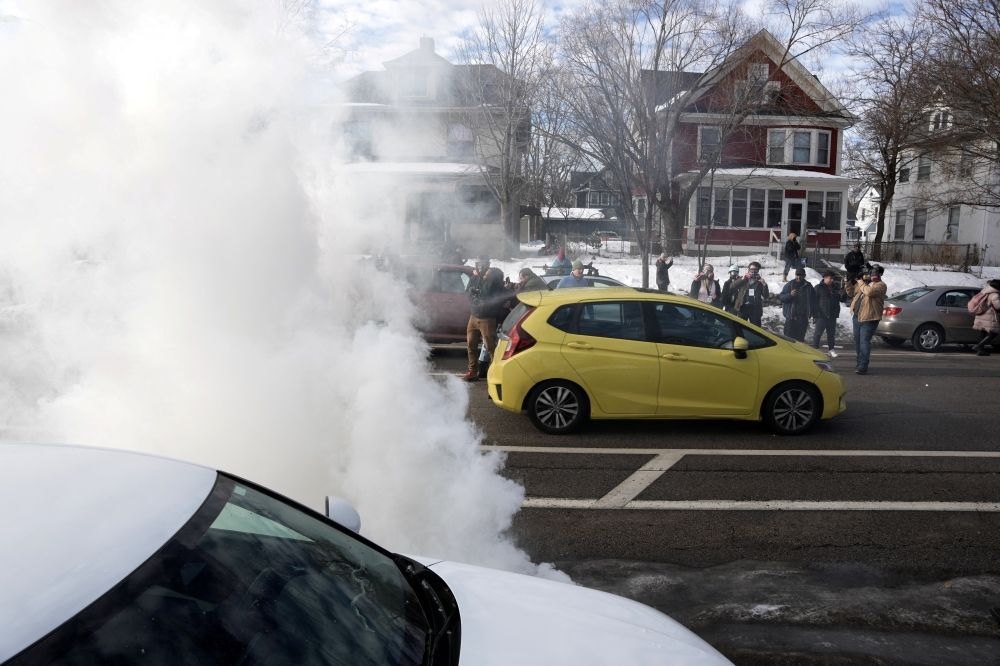
An observer’s car speeds away as they pursue US Immigration and Customs Enforcement (ICE) agents, following an incident where a civilian’s car was hit by ICE agents, after an ICE agent fatally shot Renee Nicole Good, in Minneapolis, Minnesota January 12, 2026. — Reuters pic
Can federal agents be sued individually?
Federal agents can only be sued individually in very limited circumstances when they violate the US Constitution, and even then, such suits rarely succeed.
In a landmark 1971 case, Bivens v. Six Unknown Named Agents, the US Supreme Court allowed a Brooklyn man to sue federal agents who searched his home without a warrant.
The court said the man’s right to sue the agents for money damages was implied in the US Constitution, even though there was no specific law passed by Congress authorising such a claim.
That ruling created a type of lawsuit known as a Bivens action, in which federal employees who violate the US Constitution can be sued in their personal capacity and forced to pay monetary damages.
But US courts only recognise Bivens actions in very limited contexts, and in 2022, prohibited such claims against federal border agents conducting immigration enforcement.
Those more recent rulings have made it nearly impossible to sue federal officers like ICE agents in their individual capacity.
What about criminal liability?
The bar against criminal prosecution of federal law enforcement officers such as ICE agents is very high and indictments are rare.
State-level prosecutors can file criminal charges against federal agents under certain circumstances. They would have to show that a federal agent’s actions were outside the scope of their official duties, objectively unreasonable or clearly unlawful. — Reuters
These were the details of the news ‘Byzantine, time-consuming processes’: Renee Good case highlights why suing ICE agents is so difficult in the US for this day. We hope that we have succeeded by giving you the full details and information. To follow all our news, you can subscribe to the alerts system or to one of our different systems to provide you with all that is new.
It is also worth noting that the original news has been published and is available at Malay Mail and the editorial team at AlKhaleej Today has confirmed it and it has been modified, and it may have been completely transferred or quoted from it and you can read and follow this news from its main source.