
Hello and welcome to the details of ‘Pins on a Map’: Chicago student journalists track ICE raids with data tools and now with the details
- Nevin Al Sukari - Sana'a - Chicago student journalists use data tools to document immigration arrests
- College journalists verify immigration agent sightings with photos, eyewitness accounts
- On immigration, collaboration trumps scoops as priority for some journalists
CHICAGO, Dec 16 — The windowless newsroom of The Phoenix, the Loyola University Chicago newspaper, hums like an old refrigerator. A coffee pot burbles in the corner as juniors Julia Pentasuglio and Ella Daugherty lean over a glowing laptop, updating a Google map.
Each red pin marks a sighting of federal immigration agents near campus and the surrounding neighbourhoods.
Nearby, editor-in-chief Lilli Malone scrolls through reports from Rogers Park, a neighbourhood along Chicago’s lakefront where 80 languages mix. There were new pins from seven sightings that day alone — reports of vans barrelling down side streets, masked immigration officers drawing guns, students watching from on-campus dorm windows as neighbours were taken away.
The young student journalists normally cover dorm-room Thanksgiving recipes and local Christmas tree lightings, but find themselves with a new role under Donald Trump’s presidency: documenting immigration raids. Their goal: counter online rumour with facts and give locals a map of frequently targeted areas as panic spread in recent months over who might be picked up by immigration agents next.
Student and veteran journalists say that college newsrooms, independent media and legacy outlets across Chicago are now working together in ways that upend decades of cutthroat competition, building tools to track enforcement and collaborating on information.
Since Trump’s return to the White House, his administration has ordered aggressive immigration sweeps in cities with large foreign-born communities, including Chicago, to make good on a campaign promise to deport people living in the US illegally.
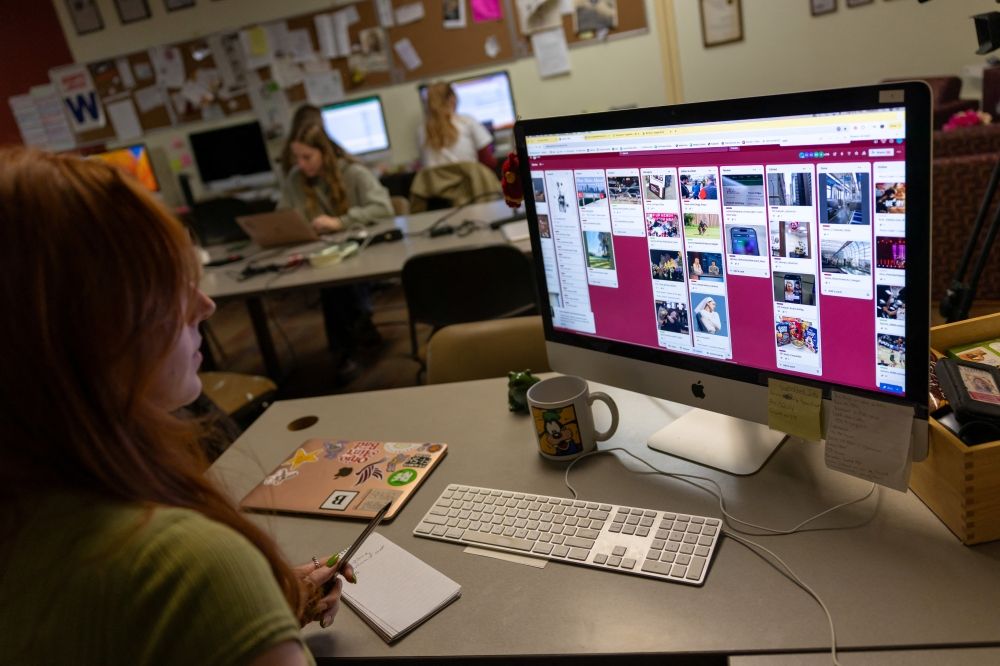
Lilli Malone, a student at Loyola University and editor in chief of The Loyola Phoenix newspaper, looks at a screen during closing night at the university newsroom in downtown Chicago, Illinois November 11, 2025. — Reuters pic
Translating rumour into fact
Weeks after Loyola students began classes this fall, the US Department of Homeland Security launched its Operation Midway Blitz in Chicago in early September, deploying Border Patrol agents armed with high-powered weapons and tear gas. Local officials objected, Illinois Governor JB Pritzker called the blitz “unlawful and unwarranted” and a new state law now allows Illinois residents to sue federal immigration agents if they believe their civil rights have been violated.
DHS said it is targeting violent criminals putting Americans at risk, and that it has arrested more than 4,300 people as part of the operation.
“Our efforts remain ongoing, we aren’t leaving Chicago,” a DHS spokesperson said in a statement. Fear had already been building on campus before the operation started. A man from the US Census Bureau walked into a dorm months earlier, Malone and Pentasuglio said, prompting false rumours that US Immigration and Customs Enforcement had arrived. Students flooded The Phoenix staff with questions about whether the rumours were true.
Some had reason to be worried. Loyola has long welcomed immigrants without legal status in the US, including Deferred Action for Childhood Arrivals students who came to the US as children, particularly in its medical school — a point of pride at a Jesuit university built on a mission of social justice.
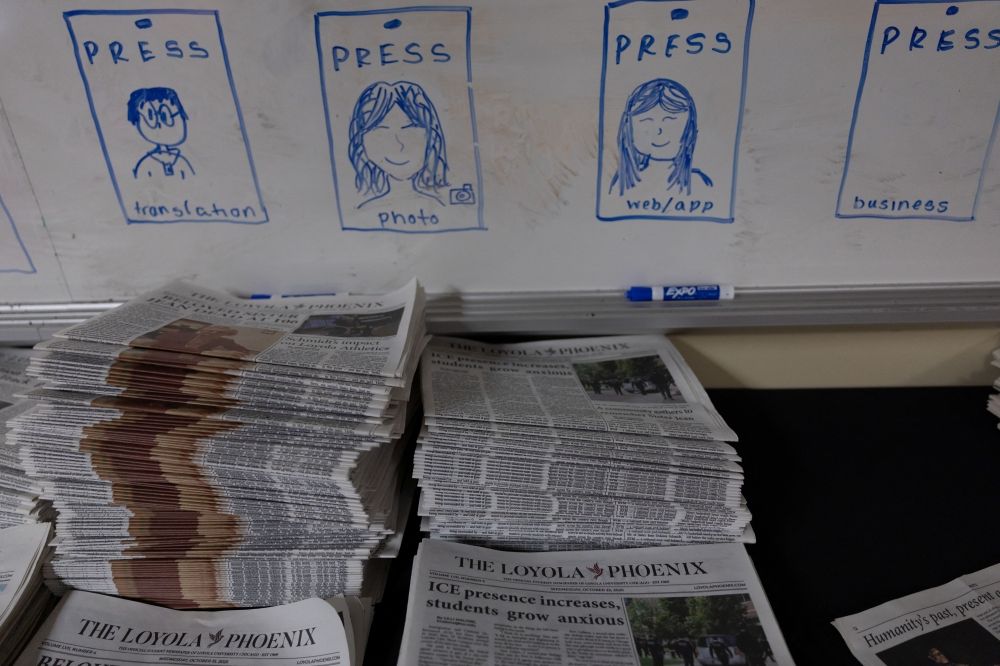
A stack of The Loyola Phoenix newspapers is displayed at the university newsroom in downtown Chicago, Illinois November 11, 2025. — Reuters pic
“People were scared, and they needed someone to verify what was real,” Malone said.
Loyola University officials did not respond to requests for comment. So in early October, Malone and Pentasuglio, The Phoenix’s managing editor, opened a blank Google Map and began dropping pins — each confirmed through photos, timestamped videos or multiple witnesses, they said.
The pins gave students and nearby residents a place to check rumour against fact — to see which sightings had been verified, and to understand where agents had clustered in recent days so they could better gauge which areas might carry risk.
Notes are attached to each pin — October 12: Multiple armed agents were spotted at the 1200 block of West North Shore Avenue midday. October 21: An arrest was reported at the North Lincoln Avenue Home Depot at 9.58am.
A DHS spokesperson confirmed to Reuters that US Border Patrol conducted enforcement operations and made arrests at these locations on those dates.
At the University of Chicago, deputy editor-in-chief Elena Eisenstadt says the college newspaper, The Maroon, built its Datawrapper tracker after reports lit up on social media outlets like Sidechat, a student app where users can chat anonymously.
“It felt like a wave,” she said. “When everyone is talking about something like that, you have to do something.”
At DePaul University, the managing editor of the DePaulia campus newspaper, Jake Cox, and other staff leaned on the social media accounts of students and others for tips when ICE’s presence near its Lincoln Park campus spiked.
At the Block Club Chicago nonprofit news group where he interns, Cox built an ICE WhatsApp channel — a platform widely used by immigrant Chicagoans — where nearly 3,200 followers receive a steady stream of immigration stories, agent sightings and “Know Your Rights” links.
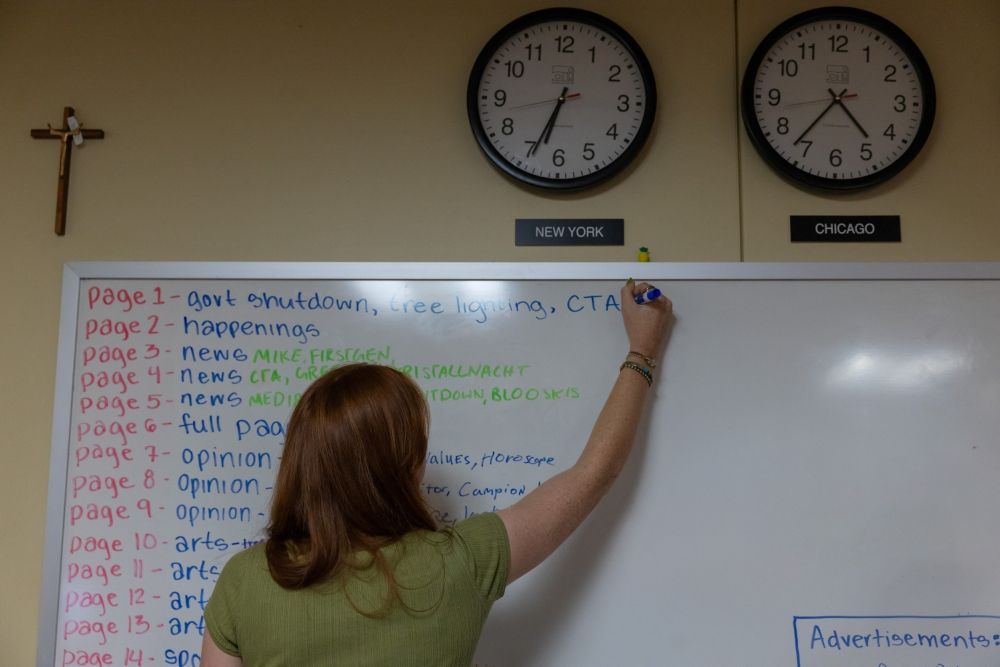
Lilli Malone, a student at Loyola University and editor in chief of The Loyola Phoenix newspaper, works on the layout for the next edition in the university newsroom in downtown Chicago, Illinois November 11, 2025. — Reuters pic
Some journalists prioritise collaboration
The students are joining a broader wave of local mobilisation against ICE across Chicago that has included cyclists trailing unmarked vans through alleys, parents forming checkpoints outside elementary schools and Pilates students shouting at agents pulling people into SUVs while neighbours film.
For months, local reporters covering immigration enforcement in Chicago have also been sharing story leads, safety tips and source contacts with competitors through encrypted communication systems, said Maira Khwaja, public impact strategy director at the Invisible Institute, an independent, local journalism nonprofit.
The story has become too big, she said, and there are simply too few journalists to cover it. “More of us is better.”
At The Phoenix, when staff get a tip outside their coverage area, they said they help get the information to other papers.
At the city’s biggest newspaper, the Chicago Tribune, senior editor Erika Slife says she grew up in the old scoop culture but that the current journalistic landscape has sometimes led to collaboration across outlets.
For example, after US Border Patrol commander-at-large Gregory Bovino left Chicago on November 13 and headed for Charlotte, North Carolina, reporters from The Charlotte Observer newspaper contacted Tribune staff the next day for insight and what to expect, said Tribune investigative reporter Gregory Royal Pratt.
Pratt and several co-workers quickly got onto a video conference call with the North Carolina reporters, he said, and shared what worked for them — from lining up safety equipment, to following helicopter traffic and vetting government information for accuracy.
“It still feels good to be first,” said Slife, who leads the paper’s immigration coverage. Now she tells her reporters, “it’s more important to be right. We may not always be first, but we’ll do it best.” — Reuters
These were the details of the news ‘Pins on a Map’: Chicago student journalists track ICE raids with data tools for this day. We hope that we have succeeded by giving you the full details and information. To follow all our news, you can subscribe to the alerts system or to one of our different systems to provide you with all that is new.
It is also worth noting that the original news has been published and is available at Malay Mail and the editorial team at AlKhaleej Today has confirmed it and it has been modified, and it may have been completely transferred or quoted from it and you can read and follow this news from its main source.