Hello and welcome to the details of Indian capital air turns toxic after soaring past 58 times WHO limit after Deepavali fireworks and now with the details
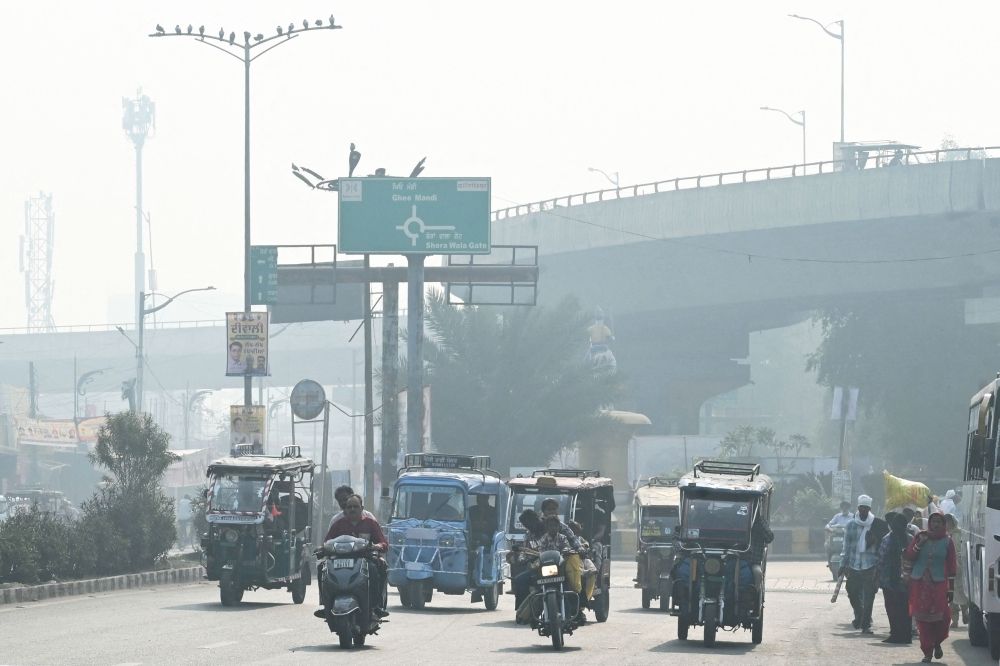
Nevin Al Sukari - Sana'a - Commuters ride along a street amid dense smog, a day after Diwali, the Hindu festival of lights in Amritsar November 9, 2026. — AFP pic
NEW DELHI, India, Nov 9 — Toxic air in parts of India’s capital New Delhi soared to more than 58 times the World Health Organisation’s recommended daily limit today, after fireworks for the Hindu festival of Diwali, air monitor data showed.
Millions celebrate the annual festival of lights with fireworks in one of the world’s most polluted capitals, worsening winter smog fuelled by vehicle emissions, farm fires and industry.
The Supreme Court this month allowed the limited use of so-called “green” firecrackers, designed to produce fewer emissions, during Diwali.
But restrictions are routinely flouted, with the city reverberating with explosions.
Early this morning, around eight hours after the peak of the bursting fireworks, levels of cancer-causing PM 2.5 microparticles hit 879 micrograms per cubic metre in the Mandir Marg locality, according to monitoring organisation IQAir, which cited data from a city government station.
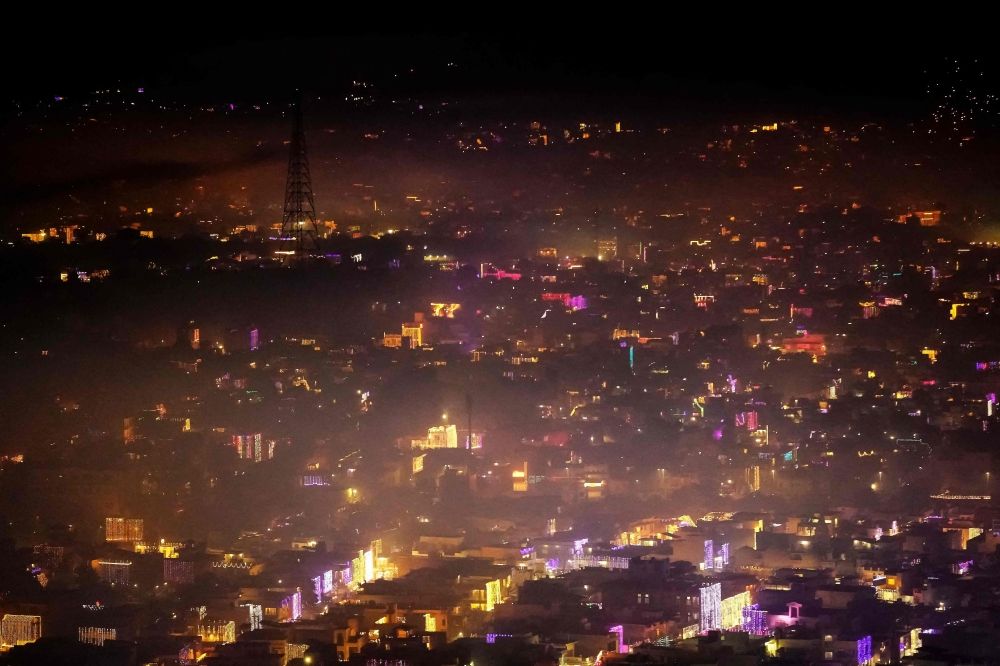
Dense smog shrouds an illuminated residential area as seen from the Taragarh Fort in Ajmer on November 8, 2026 on the occasion of Diwali, the Hindu festival of lights. — AFP pic
That is nearly 59 times the WHO’s recommended daily maximum.
Authorities have in recent weeks implemented restrictions on traffic and construction as they seek to curb smog in New Delhi, home to more than 30 million people.
Vehicles account for 23 per cent of Delhi’s winter pollution, while biomass burning, including farm stubble fires, contributes 20 per cent, according to India’s environment ministry.
Industry, including coal-fired power plants, contributes about nine per cent.
The largest share, 27 per cent, comes from secondary particles, formed when gases released by vehicles, industry, power plants and biomass burning react in the atmosphere.
A 2024 study published in The Lancet Planetary Health, a peer-reviewed research journal, estimated that 3.8 million deaths in India between 2009 and 2019 were linked to air pollution. — AFP
These were the details of the news Indian capital air turns toxic after soaring past 58 times WHO limit after Deepavali fireworks for this day. We hope that we have succeeded by giving you the full details and information. To follow all our news, you can subscribe to the alerts system or to one of our different systems to provide you with all that is new.
It is also worth noting that the original news has been published and is available at Malay Mail and the editorial team at AlKhaleej Today has confirmed it and it has been modified, and it may have been completely transferred or quoted from it and you can read and follow this news from its main source.