

Hello and welcome to the details of ‘Grief, anger, rage’: Austria’s Nazi past collides with business plans at former camp site and now with the details
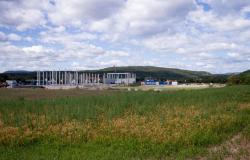
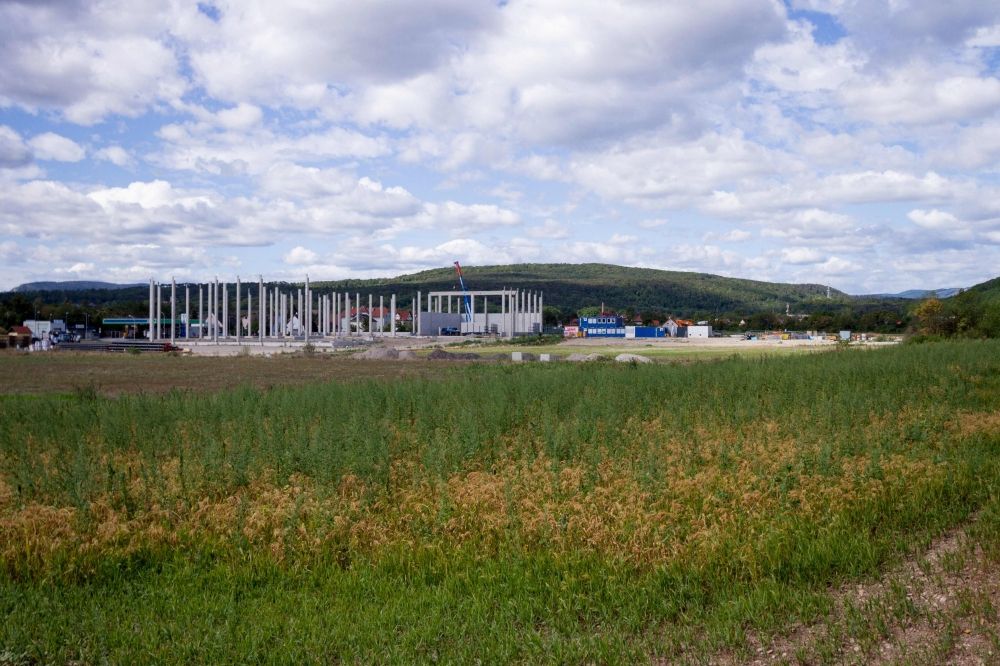
Nevin Al Sukari - Sana'a - A construction site for a business park stands on the grounds of a former Nazi forced labour complex in Leobersdorf, Austria, on August 22, 2026, sparking anger among activists seeking to preserve the site. — AFP pic
LEOBERSDORF (Austria), Aug 28 — A few crumbling concrete blocks in an overgrown field are all that remains visible of what was once a sprawling Nazi forced labour complex around the Austrian town of Leobersdorf.
Now, plans to build a business park on the site, including a cold storage warehouse and branch of the discount supermarket chain Lidl, have sparked anger in the Alpine nation, which long neglected to address its Nazi past.
“For me, it’s a sad feeling, because a place burdened by history is being built over, sacrificed to the economy,” Erich Strobl, head of a local campaign to preserve part of the site, told AFP.
After Nazi Germany annexed Austria in 1938, the Weinberglager complex was used for thousands of prisoners of war and forced labourers.
It later included the Hirtenberg subcamp of the Mauthausen concentration camp — Austria’s second-largest women’s camp.
Around 400 women, mainly from the Soviet Union but also from Italy and Poland, were imprisoned at the Hirtenberg subcamp between September 1944 and April 1945 and forced to manufacture infantry munitions at a nearby factory complex.
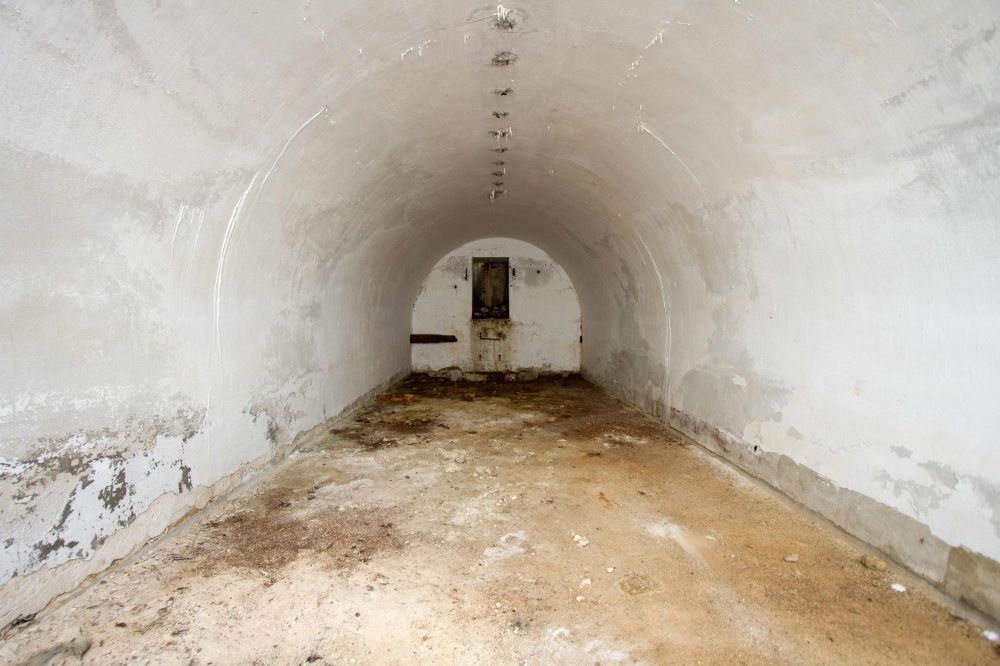
A well-preserved space within the ruins of the former Patronenfabrik ammunition factory in Hirtenberg, Austria, is pictured on August 22, 2026, where forced labourers manufactured munitions during World War II. — AFP pic
Although some factory ruins survive, the camp barracks and most other structures were gradually demolished, repurposed or destroyed after the war.
But Bertrand Perz, a historian specialising in the Mauthausen camp, told AFP the Hirtenberg site remains “historically important”, partly because “women prisoners in Mauthausen have been marginalised in the culture of remembrance”.
Plans to build a business park on the plot about 40 kilometres (25 miles) south of Vienna, including on land that once formed part of the concentration camp, were first revealed in 2024.
‘Grief, anger, rage’
Archaeological investigations have identified surviving traces of the former camp complex, but Austria’s Federal Monuments Office concluded that the remains were “not sufficient” for monument protection.
With the bulldozers now moving in, activists have renewed their calls for the site to be preserved.
“A former concentration camp must not be built over with new structures,” the International Mauthausen Committee said.
Standing in front of the site, where grey columns already rise from the ground, Josef Pumberger, a board member of the Mauthausen Committee Austria, told AFP he felt “grief, anger, rage, that something like this can happen in Austria in the year 2026”.
A circular concrete bunker built into a forested hillside in Hirtenberg, Austria, is pictured on August 22, 2026, a surviving remnant of the former Nazi forced labour complex. — AFP pic
The project has also attracted controversy because the land was previously owned by the local mayor, Andreas Ramharter, who sold it in 2022 and 2023 for more than €15 million (RM69.7 million), according to local media reports.
Ramharter did not want to comment when contacted by AFP.
Austrian company TRA LEO GmbH & Co KG, which bought the plot, told AFP it had offered to support the creation of a memorial on the site.
Lidl confirmed plans to open a store in the planned business park, but stressed that it would be located “not directly on the site of the former concentration camp, but on an adjacent plot of land”.
Stele monument
In the aftermath of World War II, Austria long presented itself as a victim of the Nazis, ignoring the complicity of many Austrians.
It was only from the late 1980s that the country where Adolf Hitler was born began to examine its responsibility in the Holocaust.
Perz, the historian, said a debate like the one today around the Hirtenberg site “would have been impossible in the 1980s”, adding that there is now “more sensitivity” towards former Nazi sites.
However, in contemporary Austria, demands for remembrance are increasingly clashing with “the opposite tendency, namely to say: ‘Now this really has to stop’,” he said.
The extreme-right FPOe party, founded by former Nazis, topped the polls in legislative elections held in 2024, though it failed to find partners to govern.
But it is part of the governing coalition in five of the country’s nine states.
In central Leobersdorf, locals approached by AFP had either not heard about the development or did not want to talk about it.
A stele monument was erected in 2024 to commemorate the victims of the Hirtenberg camp.
A stele commemorating and listing the names of about 40 subcamps of the Mauthausen concentration camp stands in Hirtenberg, Austria, on August 22, 2026, near the site of a former Nazi forced labour complex facing development. — AFP pic
But for Pumberger, that is not enough.
“It is very important to have tangible evidence of the buildings in which the Nazis imprisoned people, tortured them, killed them,” he said.
“Otherwise it becomes a virtual act of remembrance, or one that exists only in books and photos and films.” — AFP
These were the details of the news ‘Grief, anger, rage’: Austria’s Nazi past collides with business plans at former camp site for this day. We hope that we have succeeded by giving you the full details and information. To follow all our news, you can subscribe to the alerts system or to one of our different systems to provide you with all that is new.
It is also worth noting that the original news has been published and is available at Malay Mail and the editorial team at AlKhaleej Today has confirmed it and it has been modified, and it may have been completely transferred or quoted from it and you can read and follow this news from its main source.