We show you our most important and recent visitors news details Trump says Strait of Hormuz demined, warns Iran against planting more in the following article
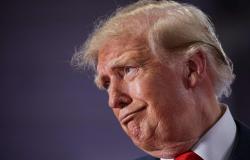
Hind Al Soulia - Riyadh - WASHINGTON — US President Donald Trump said on Tuesday the US Navy had removed or detonated all mines in the Strait of Hormuz, and warned Iran against placing new mines in the vital waterway.
"Iran has been notified that any ship or boat placing new mines will be immediately and systematically destroyed," Trump said in a post on his Truth Social platform.
Iran has largely closed Strait of Hormuz since the beginning of US-Israeli attacks on the country on February 28.
Closure of the strait has caused wild fluctuations in the price of oil on world markets. Trump has often said the US has control of the area but Iran has fired against vessels sought to cross the strait without its permission.
Oil transits through the strait were at 5 million barrels per day on Monday, provisional data from shiptracker Vortexa showed, down from more than 20 million per day before the war or about one of every five barrels consumed worldwide.
Trump said the US Space Force was watching “every square inch” of the Strait, a key waterway in the global energy supply chain. “There is a Zero Tolerance policy on mine placement in full force and effect,” Trump said in his post.
The US and Iran have not conducted air strikes on each other’s militaries for weeks, but attacks on vessels in the Strait of Hormuz have continued as the two sides vie for control of the narrow maritime passage.
Earlier, Trump expressed outrage at the mounting number of executions in Iran of people allegedly involved in mass protests earlier this year before the Middle East war began.
“The failing Islamic Republic of Iran is not paying large segments of their military, while at the same time killing protesters, even when they are not protesting, at levels not seen before,” the president wrote on Truth Social.
“It is a humanitarian crisis of epic proportions, and must be stopped, NOW,” he added.
It was not immediately clear what new information had spurred the early morning post, but there has been a steady increase in executions since the outbreak of the war on February 28.
The joint US-Israeli strikes which kicked off the war came weeks after the violent quelling of mass protests in Iran.
Rallies initially began in late December over outrage at the high cost of living, but rapidly evolved into widespread anti-government demonstrations that peaked on January 8 and 9.
Iranian authorities reported more than 3,000 deaths, but attributed the violence to “terrorist acts” orchestrated by the United States and Israel.
Rights groups based abroad recorded a far higher toll and said the security forces had fired on demonstrators.
Earlier this month, more than 30 countries signed a joint letter condemning “in the strongest terms the ongoing executions of protesters and use of the death penalty” by Iran.
The United States, where capital punishment is still legal, did not sign the letter.
Since then, at least three more people have been executed in Iran on charges related to the protests.
Iran promised to retaliate against expanded US sanctions that the Americans said would cut Iran’s economic lifeline, with Tehran expressing confidence that major trading partners would resist Washington's pressure campaign.
US Treasury Secretary Scott Bessent unveiled the measures on Monday but stopped short of the most punishing sanctions, saying countries that continued trading with Iran risked being forced out of the dollar-based financial system.
Bessent declined to identify the countries that would be targeted or reveal when the penalties would take effect, saying he would instead give them time to comply with the new directive.
The Treasury Department did announce new sanctions on 60 individuals, entities and vessels, but the list did not feature any of the Chinese financial institutions suspected of facilitating Iran's oil trade.
Iran and the United States signed an interim deal in June aimed at ending the war that began with US and Israeli attacks on Iran, but the Islamabad memorandum, as it is known, quickly faltered.
Mediator Pakistan made “significant progress” in the latest talks with Tehran that focused on measures such as prevention of further escalation of the conflict and the reopening of the Strait of Hormuz, the Pakistani military said in a statement on Tuesday.
“The Iranian president candidly shared his government's perspective and we had a very constructive exchange on the issues involved,” Interior Minister Mohsin Naqvi, who accompanied army chief Asim Munir to Tehran, said on X.
These were the details of the news Trump says Strait of Hormuz demined, warns Iran against planting more for this day. We hope that we have succeeded by giving you the full details and information. To follow all our news, you can subscribe to the alerts system or to one of our different systems to provide you with all that is new.
It is also worth noting that the original news has been published and is available at Saudi Gazette and the editorial team at AlKhaleej Today has confirmed it and it has been modified, and it may have been completely transferred or quoted from it and you can read and follow this news from its main source.