Hello and welcome to the details of Is Sudan setting itself up for another militia crisis? and now with the details
Nevin Al Sukari - Sana'a - KHARTOUM, July 23 — In Sudan’s capital, young militiamen, some no older than 15, ride around in pickup trucks mounted with missiles: a familiar sight to civilians who remember how the current war began.
Three years ago, a powerful militia that had come under the auspices of the state – the paramilitary Rapid Support Forces (RSF) – turned against the army, sparking a conflict that has killed more than 200,000 people by some estimates.
Now, with Sudan’s army relying on a new coalition of militias to fight its battles, many fear it is repeating the same cycle.
“We’ve seen this scenario over and over. It’s the same old mistakes, and it’s only a matter of time before they turn on each other,” said a 30-year-old Sudanese writer who, like others AFP spoke to, requested anonymity for security reasons.
Of the dozens of armed groups in army-controlled territory, technically under army chief Abdel Fattah al-Burhan, three are the most powerful:
- The Joint Forces, a coalition of former Darfuri rebel militias
- The Sudan Shield Forces, which defected from the RSF
- And the Baraa ibn Malek Brigade, an Iran-linked Islamist force
All have inflated their ranks since the war broke out in April 2023, and possess their own artillery, anti-aircraft missiles and killer drones.
And all are “allies for now”, wary civilians whispered to AFP in the army-controlled cities of Port Sudan, Khartoum and Wad Madani.
“The government’s technically banned them from carrying weapons, but in the markets, on the streets, you still see them everywhere. It’s frightening,” said a 50-year-old father in Khartoum.
In the capital, Joint Forces fighters wearing Darfuri headwraps wield assault rifles at a restaurant, one table over from unarmed soldiers.
On the city’s fringes, AFP journalists encountered Baraa ibn Malek fighters, including one stopping cars in civilian clothes with an AK-47 slung across his back.
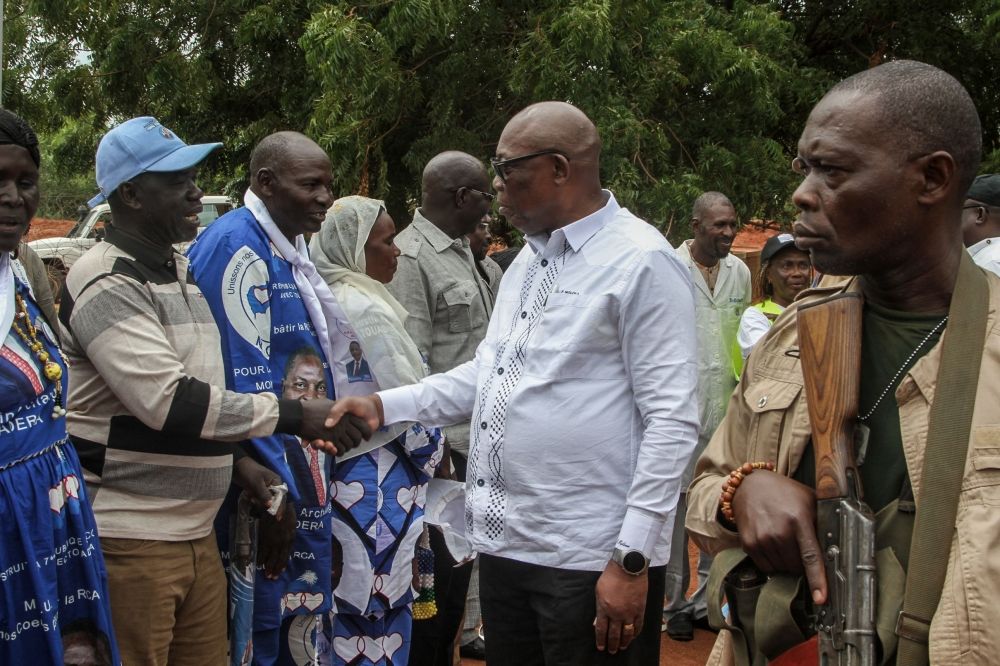
Central African Prime Minister Felix Moloua (centre) greets residents during a visit to Birao on July 18, 2026 following a deadly June 30 attack in nearby Am Dafock near the Sudan border. — AFP pic
The Sudan Shield Forces, meanwhile, hold dominion in Al-Jazira state southeast of Khartoum – establishing checkpoints and harassing civilians in areas where they once committed atrocities for the RSF.
“They act like Al-Jazira is theirs,” said an activist in her twenties.
“I would never trust any of them. You don’t know where their loyalties lie.”
‘Next Hemeti’
The Sudanese army has for decades outsourced its wars in Sudan’s far reaches to militias – most disastrously, the RSF itself.
In the 2000s, then-president Omar al-Bashir armed militias known as the Janjaweed to quell an ethnic rebellion in Darfur. More than 300,000 were killed by fighters he formalised into the RSF in 2013, partly to protect his regime.
During a 2018–19 uprising, RSF commander Mohamed Hamdan Daglo – whom Bashir had affectionately called by his nickname “Hemeti” – turned on him, helping overthrow his decades-long dictatorship and becoming army chief Burhan’s right-hand man.
Burhan said it was “impossible, utterly impossible” the pair would ever fight, a year before a power struggle erupted into what the UN has called a “war of atrocities”.
The army leader appears to understand he is in the same danger today.
After retaking Khartoum from the RSF last year, Burhan directed all armed groups to leave, but they still roam freely.
He has also tried to control the US-sanctioned Baraa ibn Malek, considered the armed wing of Bashir-era Islamists that the US and Saudi Arabia have pressured him to turn away from.
His lieutenants have said armed groups must integrate into the army, yet none have indicated they intend to soon.
A breakdown in negotiations with the RSF over their own integration was the last straw that led to the current war.
“They’re all mercenaries looking out for their own interests,” said a diplomat in Sudan.
“If they ever feel short-changed, they’re out,” he added, calling the Joint Forces “the next Hemeti”.
Marriages of convenience
On Khartoum’s streets, the militiamen “walk around with their chests puffed out, like they’re looking for trouble”, said a 40-year-old accountant.
“People are scared another war between them and the army could break out at any moment.”
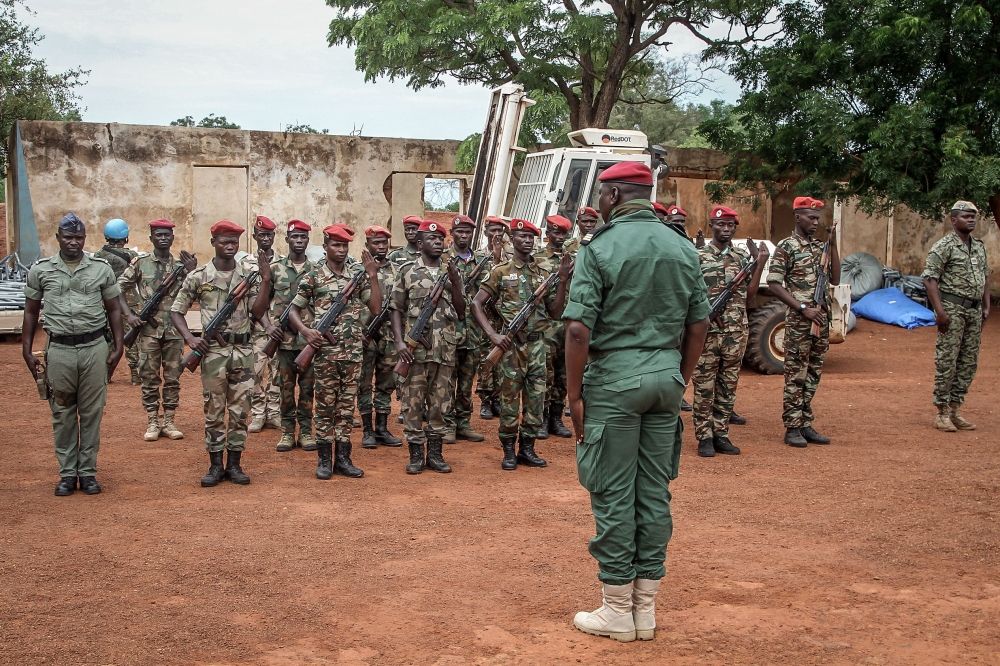
Members of the Central African Armed Forces stand in formation during Prime Minister Felix Moloua's visit to Birao on July 18. — AFP pic
In army-controlled Northern State, some civilians say “the RSF is already here”, referring to the Joint Forces, though many hail from the Darfur ethnic groups the RSF has massacred.
The group is led by two figures in Burhan’s government: Darfur governor Minni Minawi and finance minister Gibril Ibrahim.
Both rebelled against Khartoum for years, and are only “united with the army today in fighting the RSF as a common enemy”, said Sudanese analyst Kholood Khair.
As for who might betray the government next, Khair said “there are many possible contenders”.
The most dangerous, she said, is Sudan Shield Forces leader Abu Aqla Kaykal, who turned on the RSF in 2024 and has since created “his own fiefdom where he has unchecked power”.
Native to Al-Jazira state, which he now controls, “Kaykal is trying to whitewash the crimes he committed with the RSF”, said the local activist in her twenties.
Under his command, fighters besieged and burned villages while conquering the state for the RSF.
After defecting, they committed ethnic massacres against villagers they accused of colluding with the RSF.
Kaykal now appears regularly alongside Burhan, who analysts fear is emboldening him to counter Minawi.
“If anyone is following in the footsteps of the RSF, it’s actually Kaykal,” said Khair.
“Kaykal and Burhan are on OK terms, but what happens when he decides he wants something Burhan won’t give him?” — AFP
These were the details of the news Is Sudan setting itself up for another militia crisis? for this day. We hope that we have succeeded by giving you the full details and information. To follow all our news, you can subscribe to the alerts system or to one of our different systems to provide you with all that is new.
It is also worth noting that the original news has been published and is available at Malay Mail and the editorial team at AlKhaleej Today has confirmed it and it has been modified, and it may have been completely transferred or quoted from it and you can read and follow this news from its main source.