
Hello and welcome to the details of Trump cancels ‘planned’ massive strike on Iran inside Hormuz truce he declared and now with the details
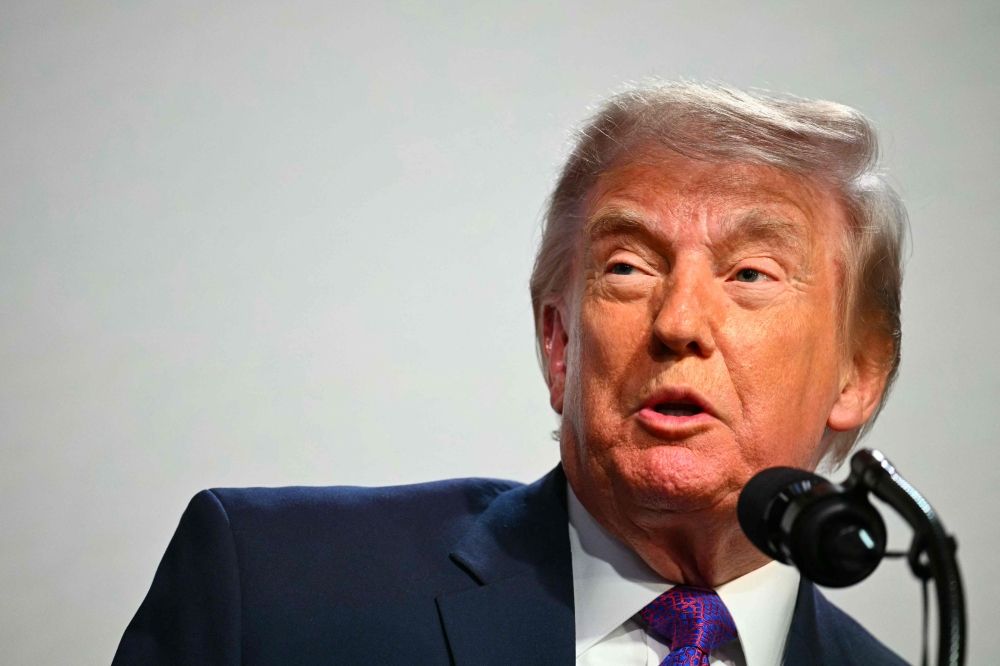
Nevin Al Sukari - Sana'a - US President Donald Trump speaks during an event in the South Court Auditorium of The White House in Washington, DC on May 18, 2026. — AFP pic
WASHINGTON, May 19 — US President Donald Trump said he was planning a major new assault on Iran on Tuesday, but held off as he saw hope for securing a so far elusive agreement to end the war.
Trump said that he stopped his purported attack plan at the urging of Gulf Arab allies, which Iran has threatened with reciprocal attacks if the United States and Israel end a nearly six-week ceasefire.
Trump, who had indefinitely extended the truce and made clear he wants to exit a war that has proven to be a political liability, said he had prepared a new attack for Tuesday after Iran refused his outlines of a deal.
The leaders of Qatar, Saudi Arabia and the United Arab Emirates asked him “to hold off on our planned Military attack of the Islamic Republic of Iran, which was scheduled for tomorrow, in that serious negotiations are now taking place,” Trump wrote on his Truth Social platform.
But Trump added he had instructed the US military to be “prepared to go forward with a full, large scale assault of Iran, on a moment’s notice, in the event that an acceptable Deal is not reached.”
Speaking later at a White House event, Trump said there had been a “very positive development” and that Arab allies said a deal was near that would leave Iran without nuclear weapons, which Tehran denies pursuing.
“There seems to be a very good chance that they can work something out. If we can do that without bombing the hell out of them, I’d be very happy,” Trump said.
Iran has repeatedly rebuffed Trump’s offers and has exerted control over the Strait of Hormuz, the vital waterway into the Gulf, sending global oil prices spiralling.
Iranian foreign ministry spokesman Esmaeil Baqaei confirmed exchanges with the United States through mediator Pakistan and said Tehran made clear its “concerns.”
The cleric-run state, whose supreme leader was killed in the initial strikes on February 28 but has proven resilient, is demanding the release of Iranian assets frozen abroad, the lifting of long-standing sanctions and reparations for the war.
Iranian President Masoud Pezeshkian, considered a moderate in a system increasingly dominated since the war by the hardline Revolutionary Guards, said that speaking with Washington “does not mean surrender” and that Iran would defend its “dignity” and rights.
Iran’s Fars news agency said Sunday that Washington had presented a five-point list, which included a demand for Iran to keep only one nuclear site in operation and transfer its stockpile of highly enriched uranium to the United States.
US authorities had refused to release “even 25 per cent” of Iran’s frozen assets or pay any reparations, Fars said.
But Iran’s Tasnim news agency, citing an unnamed source close to the Iranian negotiating team, said the United States made one new step forward in the latest text by agreeing to waive oil sanctions while negotiations were underway.
New Hormuz body
In an earlier proposal, which was sent last week, Iran had called for an end to the war on all fronts, including Israel’s campaign in Lebanon, as well as a halt to a US naval blockade on Iranian ports in place since April 13.
Fars said the Iranian proposal had emphasised that Tehran would continue to manage the strategic Strait of Hormuz, a vital energy conduit which Iran has largely kept closed since the start of the war.
On Monday, the Persian Gulf Strait Authority, a new body Iran has set up to manage the strait, said it would provide “real-time updates” on the waterway via X.
The Revolutionary Guards also said Monday that internet fibre optic cables passing through the strait could be brought under an Iranian system of permits.
Hoping to control oil prices, the US Treasury extended by 30 days a sanctions waiver for Russian oil cargoes already at sea, continuing to ease the pressure on Moscow since its 2022 invasion of Ukraine.
Strike in Kurdistan
Iran has also been ramping up military pressure.
The Revolutionary Guards on Monday said they struck groups linked to the United States and Israel within the Iranian province of Kurdistan, near the border with Iraq.
In a statement carried by the ISNA news agency, the Guards said groups from “northern Iraq and acting on behalf of the US and the Zionist regime were attempting to smuggle a large shipment of American weapons and ammunition” into Iran.
Raising fears even higher in the region, a drone strike on Sunday – unclaimed but which a UAE official appeared to blame on Iran – triggered a fire near a nuclear power station in the emirate of Abu Dhabi.
Trita Parsi, a critic of the war who is executive vice president of the Washington-based Quincy Institute think tank, said that Trump’s latest message aimed to reframe the narrative to show himself in control of developments.
The Gulf Arabs’ warning against an attack “could be true, but either way, they provide him with a face-saving exit from his previous threats,” he said. — AFP
These were the details of the news Trump cancels ‘planned’ massive strike on Iran inside Hormuz truce he declared for this day. We hope that we have succeeded by giving you the full details and information. To follow all our news, you can subscribe to the alerts system or to one of our different systems to provide you with all that is new.
It is also worth noting that the original news has been published and is available at Malay Mail and the editorial team at AlKhaleej Today has confirmed it and it has been modified, and it may have been completely transferred or quoted from it and you can read and follow this news from its main source.