Hello and welcome to the details of Strait still shut and Lebanon fighting strains truce as US and Iran aim for first talks and now with the details
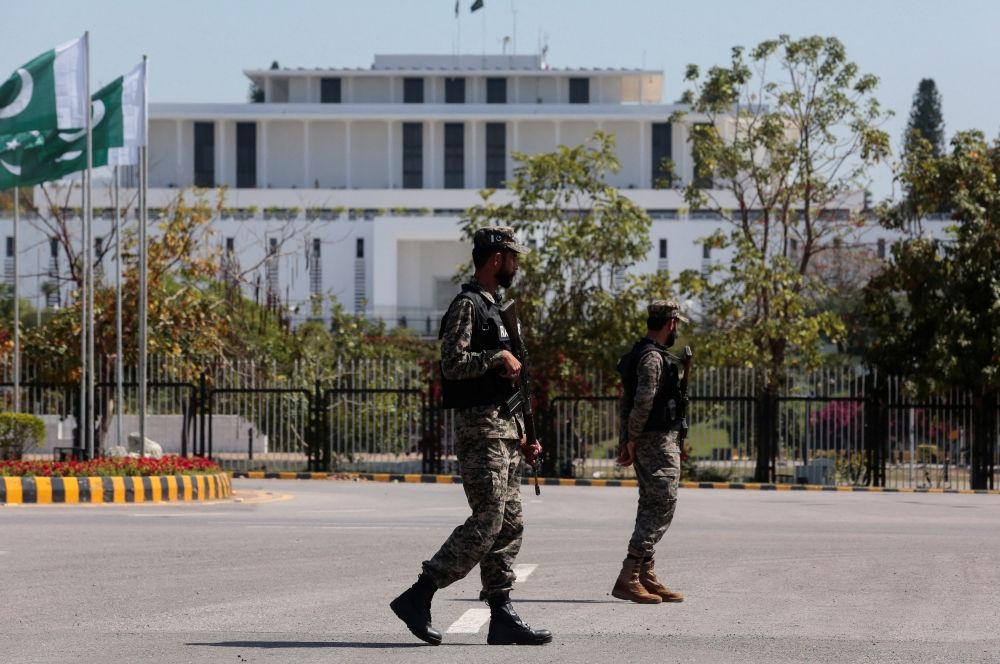
Nevin Al Sukari - Sana'a - Pakistani Rangers patrol near the president’s house, as Pakistan prepares to host the US and Iran for peace talks, in Islamabad April 10, 2026. — Reuters pic
DUBAI, April 10 — The Strait of Hormuz remained shut today and Israel traded fire with Hezbollah in Lebanon, which the United States and Iran each described as violations of their ceasefire deal on the eve of their first peace talks of the war.
The two-day-old ceasefire has halted the campaign of US and Israeli air strikes on Iran. But it has so far done nothing to end the blockade of the strait, which has caused the biggest-ever disruption to global energy supplies, or to calm a parallel war waged by Israel against Iran’s Hezbollah allies in Lebanon.
Iran was doing a “very poor job” of allowing oil to go through the strait, US President Donald Trump said in a social media post overnight. “That is not the agreement we have!”
In a separate post, he said oil would start flowing again, without saying how.
Pakistani capital locked down for talks
Iran, for its part, described the ongoing Israeli attacks on Lebanon as a violation of the truce. Israeli forces launched the biggest attack of the war hours after the ceasefire was announced, killing more than 250 Lebanese in sudden surprise strikes on heavily populated areas.
Iran says the truce was meant to apply to Lebanon, a position initially supported by Pakistan, which mediated it. Israel and the United States say Lebanon is not covered by the US-Iranian ceasefire. But in a shift yesterday, Israel said it would open separate talks with the Lebanese government aimed at ending the war there and disarming Hezbollah.
The rival accusations of violations appeared unlikely to derail the first planned US-Iranian peace talks, set to begin in the Pakistani capital Islamabad from tomorrow.
The centre of Islamabad was placed under complete lockdown for a hastily announced public holiday, with a security perimeter thrown up for a 3km “red zone” around a luxury hotel where all guests were ordered out to make room for both delegations.
Pakistani officials were tight-lipped about the exact timing of the arrival of the Iranian delegation to be led by Parliament Speaker Mohammad Baqer Qalibaf. A source involved in the talks said the Pakistani air force would escort the Iranians’ plane.
The US delegation, led by Vice President JD Vance, is due in time for the start of the talks tomorrow.
US inflation data to show war’s early impact
The ceasefire has brought an expectation that Middle East oil will resume flowing, and curbed benchmark oil prices based on delivery a month in the future. But the prices for present-day spot delivery have yet to fall and some refineries in Europe and Asia are paying record prices close to US$150 (RM600) a barrel.
March US consumer price figures are due today, the first official American statistics to show the war’s early impact on inflation.
In the first 24 hours of the ceasefire, just a single oil products tanker and five dry bulk carriers sailed through the strait, which typically carries 140 ships a day.
Although Trump has declared victory, the war did not achieve the aims he set out at the start: to deprive Iran of the ability to strike its neighbours, dismantle its nuclear programme and make it easier for its people to overthrow their government.
Iran still possesses missiles and drones capable of hitting its neighbours and a stockpile of more than 400kg of uranium enriched near the level needed to make a bomb. Its clerical rulers, who faced a popular uprising just months ago, withstood the onslaught with no sign of organised opposition.
Iran’s agenda at the talks now includes demands for major new concessions, including the end of sanctions that crippled its economy for years, and acknowledgment of its authority over the strait, where it aims to collect transit fees and control access in what would amount to a huge shift in regional power.
Its new Supreme Leader Ayatollah Mojtaba Khamenei, yet to be seen in public since taking over from his father who was killed on the war’s first day, released a defiant statement yesterday saying Iran would demand compensation for all wartime damage.
“We will certainly not leave unpunished the criminal aggressors who attacked our country,” he said.
The United States, for its part, wants Iran to relinquish the uranium, forgo further enrichment, give up its missiles and end support for regional allies - years-old demands left over from talks Trump abandoned two days before launching the war.
Fresh attacks in Lebanon
Israeli Prime Minister Benjamin Netanyahu’s announcement yesterday that he had given instructions to start peace talks with Lebanon as soon as possible marked a shift after he rebuffed Lebanese calls last month for direct talks.
“The negotiations will focus on disarming Hezbollah and establishing peaceful relations between Israel and Lebanon,” Netanyahu said.
Israel invaded Lebanon last month in pursuit of Hezbollah after the group fired into Israel in support of Iran. Around a fifth of Lebanese have been forced from their homes by the Israeli invasion, with troops aiming to occupy the entire southern swathe of the country.
Israel’s military said early today it had struck 10 launchers in Lebanon that fired rockets toward northern Israel yesterday evening, and that Iran-allied armed group Hezbollah had launched a missile at Israel, triggering air sirens.
Hezbollah said it had targeted Israeli military infrastructure in the northern city of Haifa. The armed group had initially indicated it would pause attacks in line with the ceasefire, but said it would resume fighting after Wednesday’s Israeli strikes.
A senior Lebanese official told Reuters Lebanon had spent the day pushing for a temporary ceasefire to allow for broader talks with Israel, describing the effort as a “separate track but the same model” as the US-Iran truce.
A US State Department official confirmed the US would host a meeting next week to “discuss ongoing ceasefire negotiations”. — Reuters
These were the details of the news Strait still shut and Lebanon fighting strains truce as US and Iran aim for first talks for this day. We hope that we have succeeded by giving you the full details and information. To follow all our news, you can subscribe to the alerts system or to one of our different systems to provide you with all that is new.
It is also worth noting that the original news has been published and is available at Malay Mail and the editorial team at AlKhaleej Today has confirmed it and it has been modified, and it may have been completely transferred or quoted from it and you can read and follow this news from its main source.