Hello and welcome to the details of G7 ministers set to tackle oil‑price surge, financial fallout of Mideast war and now with the details
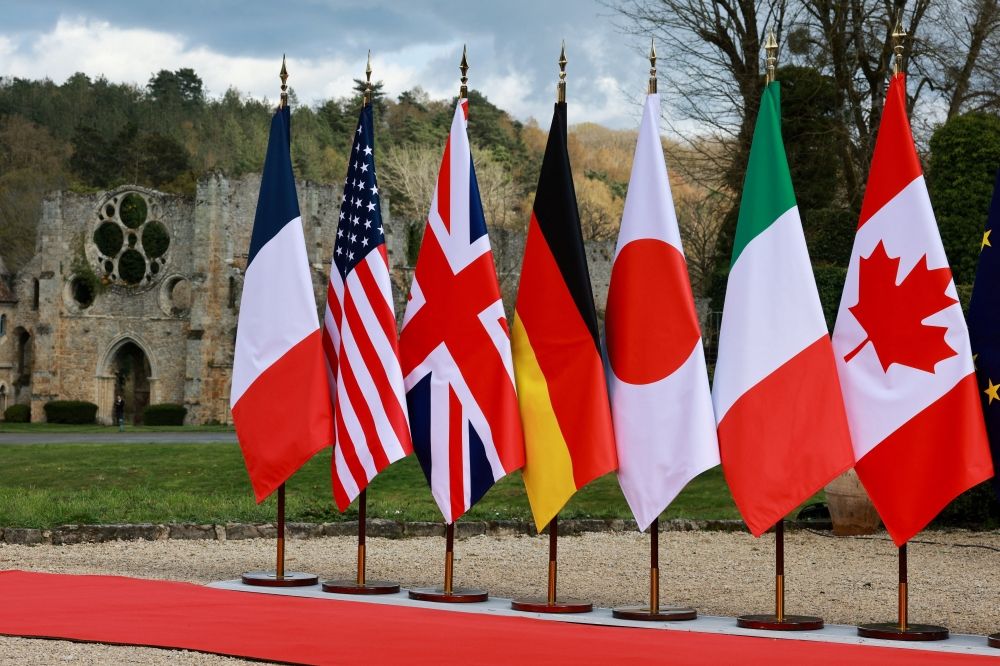
Nevin Al Sukari - Sana'a - The flags of France, US, Britain, Germany, Japan, Italy and Canada on the day of the G7 Foreign Ministers’ Meeting at Vaux-de-Cernay Abbey in Cernay-la-Ville near Paris March 26, 2026. — Reuters pic
PARIS, March 30 — Ministers from the G7 will hold talks today to unpack the economic consequences of the war in the Middle East, the French government said, as oil and gas prices continue to soar.
The United States and Israel launched strikes on Iran in late February and Tehran has hit back by targeting crude-exporting countries in the region and halting shipments through the Gulf.
The squeeze on supply has pushed oil and natural gas prices higher, with drastic knock-on effects for supply chains in countless industries.
French Finance Minister Roland Lescure said the G7 meeting, to be held via videoconference, would include energy and finance ministers as well as central bank chiefs and the heads of other international agencies.
“There are already differences in the responses largely linked to differences in exposure to the crisis,” Lescure told a news conference on Friday, stressing that Asia was particularly exposed to the turmoil.
“That is one of the reasons why we wanted to convene a G7 of finance, energy and central banks,” he said.
He added that the idea was to exchange views on the impact on financial markets and the economy, later telling local media it was the first time in half a century the G7 had used this format.
The G7, an informal grouping of the US, Canada, Britain, France, Germany, Italy and Japan, helps shape policy debates in the world’s wealthiest nations.
The United States has sought support from the group to help halt Iran’s blockade of the Strait of Hormuz shipping route.
After a meeting last week, G7 foreign ministers said it was an “absolute necessity” for Iran to re-establish free passage through the strait and called for an end to attacks on civilian infrastructure.
Governments scrambling
Under increasing pressure, many governments have rolled out measures to limit the impact of supply difficulties and soaring energy prices.
But a lack of clarity over US war aims, along with uncertainty over the potential length of the conflict and the spread of hostilities, has left governments scrambling for coherent responses.
US officials, including President Donald Trump, have said their goals in the war are almost achieved, but thousands of US personnel have been sent to the region in an unprecedented military build-up.
Activists based outside Iran say the US-Israeli campaign has killed more than 3,000 people in the country, over half of them civilians, while Lebanese officials have said more than 1,000 have been killed there since Israel began attacking its territory in retaliation for Hezbollah attacks on March 2.
Officials in Israel and countries across the Gulf have also reported much smaller numbers of casualties. — AFP
These were the details of the news G7 ministers set to tackle oil‑price surge, financial fallout of Mideast war for this day. We hope that we have succeeded by giving you the full details and information. To follow all our news, you can subscribe to the alerts system or to one of our different systems to provide you with all that is new.
It is also worth noting that the original news has been published and is available at Malay Mail and the editorial team at AlKhaleej Today has confirmed it and it has been modified, and it may have been completely transferred or quoted from it and you can read and follow this news from its main source.