
Hello and welcome to the details of Jeju Air disaster blamed on concrete structure built to reduce costs, state report says and now with the details
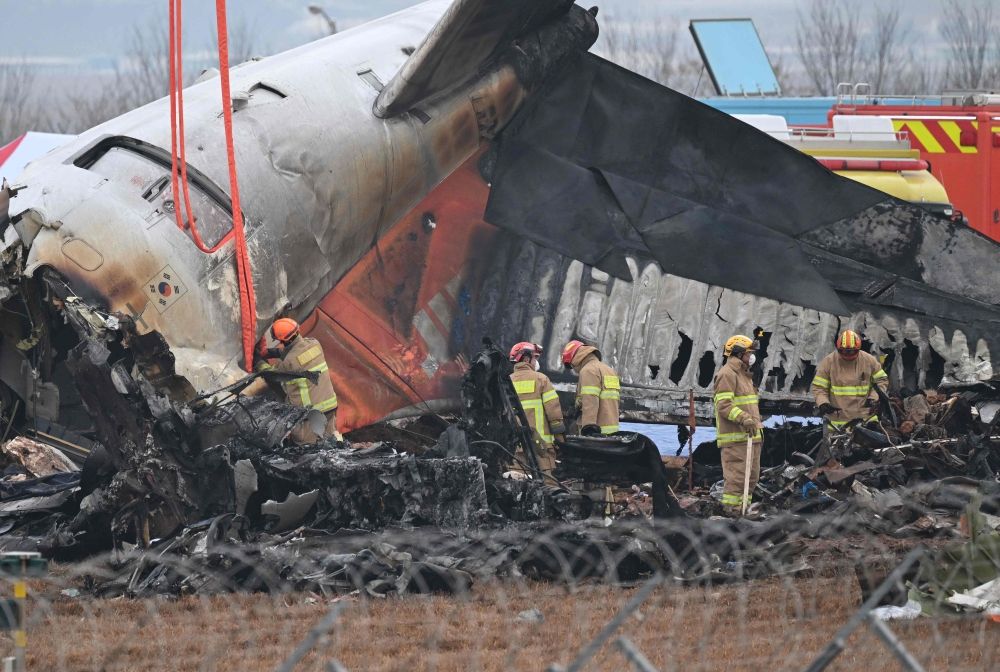
Nevin Al Sukari - Sana'a - Jeju Air Flight 2216 was coming in to land at Muan International Airport from Thailand when it struck a flock of birds and was forced to make a belly landing. — AFP file pic
SEOUL, March 10 — A concrete barrier blamed for a deadly South Korean jet crash that killed 179 people in December 2024 had been built to cut costs, the state auditor said today.
Jeju Air Flight 2216 was coming in to land at Muan International Airport from Thailand when it struck a flock of birds and was forced to make a belly landing.
While the pilots managed to put the aircraft down and slide it along the runway, it burst into a fireball after colliding with a concrete structure buried inside a mound at the end of the runway, killing 179 people on board.
Only two flight attendants seated in the tail section survived.
A government-commissioned simulation released earlier this year found that all passengers would have survived had the concrete structure supporting the localisers—a navigation antenna system that helps aircraft during landing—not been present.
The Board of Audit and Inspection said in a report that the concrete structure had been built by the transport ministry as it “sought to reduce costs”.
The report said the terrain where Muan airport’s runway and runway end safety area were constructed was sloping.
Instead of flattening the area—which would have required significant earthworks and higher expenditure—officials chose to install the localiser on a concrete structure elevated above the runway, the audit report said.
“This reduced the required volume of earthwork. The resulting height difference with the runway’s highest point was then addressed by building an embankment,” it said.
International aviation safety guidelines state that such navigation facilities must be made of frangible, or breakable, materials.
The simulation report said that if the localisers had been supported by a frangible structure, “the resulting impact would not have been severe enough to cause serious injuries”.
The aircraft “would have slid for approximately 770 metres (840 yards) before coming to a stop” had the runway been free of obstacles, the study found. — AFP
These were the details of the news Jeju Air disaster blamed on concrete structure built to reduce costs, state report says for this day. We hope that we have succeeded by giving you the full details and information. To follow all our news, you can subscribe to the alerts system or to one of our different systems to provide you with all that is new.
It is also worth noting that the original news has been published and is available at Malay Mail and the editorial team at AlKhaleej Today has confirmed it and it has been modified, and it may have been completely transferred or quoted from it and you can read and follow this news from its main source.


