Hello and welcome to the details of What the New START nuclear treaty is and why its expiry could reshape global nuclear limits and now with the details
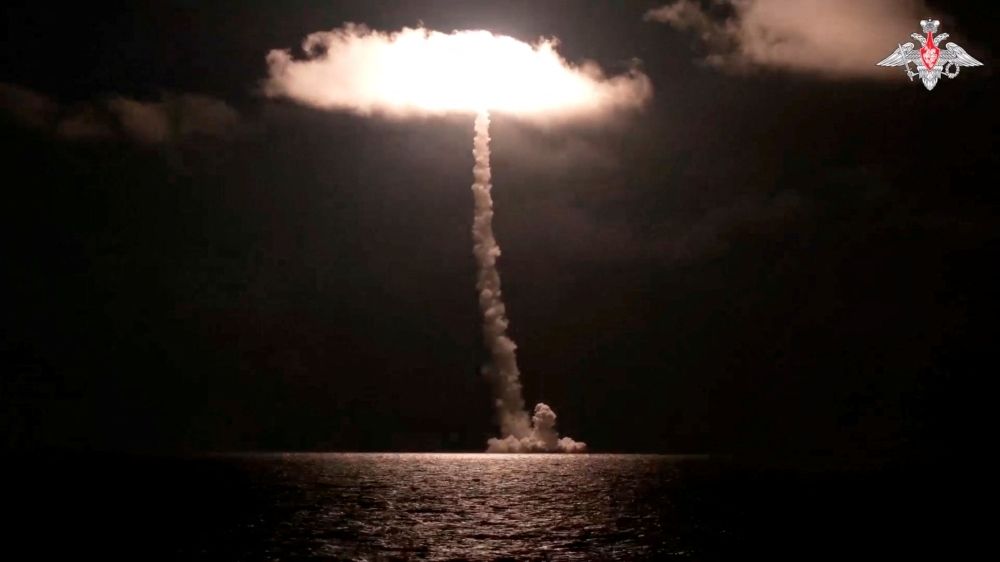
Nevin Al Sukari - Sana'a - Russia’s new nuclear-powered submarine Imperator Alexander III test launches the Bulava ballistic missile, designed to carry nuclear warheads, from the White Sea, in this image taken from video released November 5, 2023. — Russian Defence Ministry handout pic via Reuters
WASHINGTON, Feb 3 — The last Russia-US nuclear arms control treaty, known as New START, is due to expire on February 5.
Here is a guide to the treaty and why it matters.
Who signed new start, and what does it say?
New START was signed in 2010 by US President Barack Obama and Dmitry Medvedev, an ally of Vladimir Putin who served a single term as Russia’s president. At the time, relations between the two countries were undergoing a “reset”. The treaty came into force the following year.
The treaty sets limits on strategic nuclear weapons — the kind that each side would use to strike the opponent’s vital political, military and industrial centres in the event of a nuclear war. It caps the number of deployed strategic warheads at 1,550 on each side, with no more than 700 deployed ground- or submarine-launched missiles and bomber planes, and 800 launchers.
What stops either side from cheating?
The treaty included a system of short-notice, on-site inspections so each side could satisfy itself that the other was complying. But in 2023, Putin suspended Moscow’s participation because of US support for Ukraine in the war with Russia. That brought a halt to inspections — which in any case had been suspended during the Covid pandemic — and forced each side to rely on its own intelligence assessments of what the other was doing. However, neither has accused the other of breaching the warhead limits, which remain in force.
Why don’t the two sides just extend the treaty?
The treaty text says it can only be extended once, and this has already happened — in 2021, just after Joe Biden became US president. With expiry looming, Putin proposed last September that each side should agree informally to stick to the warhead limits for another year. US President Donald Trump has yet to respond formally to that suggestion.
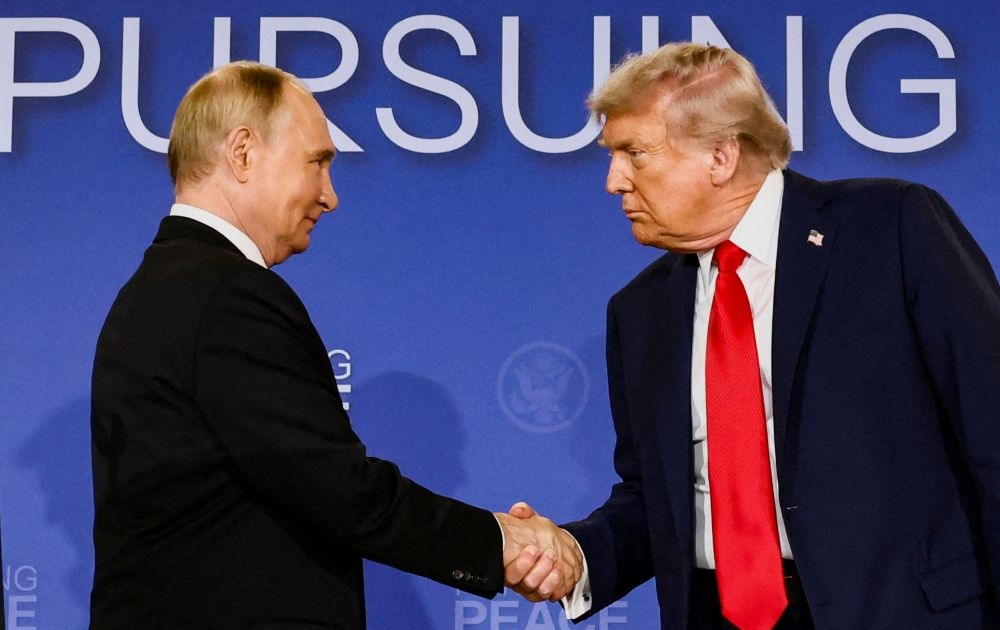
US President Donald Trump and Russian President Vladimir Putin shake hands during a press conference following their meeting to negotiate an end to the war in Ukraine, at Joint Base Elmendorf-Richardson, in Anchorage, Alaska August 15, 2025. — Reuters pic
Will Trump accept Putin’s proposal?
We don’t know yet, and time is running short. In the US, there are arguments for and against accepting it. Those in favour say it would demonstrate political will to avoid an arms race and buy time to figure out what happens next. Others say the US should free itself now from the New START limits in order to boost its arsenal to take account of a rapid nuclear build-up by China, and that doing otherwise would send a signal of weakness.
Why does it matter if there’s no treaty?
If Moscow and Washington cease observing mutual limits on their long-range nuclear arsenals, it will mark the end of more than half a century of constraints on these weapons. The expiry of New START leaves a void, as no talks have taken place on a successor. Arms control advocates fear that raises nuclear risks, especially at a time of heightened international tension because of wars in Ukraine and the Middle East. Experts say the value of nuclear treaties lies not just in setting numerical limits but in creating a stable, transparent framework to prevent arms races from spiralling out of control.
Without a replacement deal, what might both sides do?
Each side would be free to increase its missile numbers and deploy hundreds more strategic warheads. However, experts say this poses some technical and logistical challenges and would not happen overnight — it would take at least the best part of a year to make significant changes. Longer term, the concern is that an unregulated arms race would ensue, in which each side would keep on adding weapons based on worst-case assumptions about what the other was planning.
What would it take to agree a replacement to new start?
Trump says he wants a new, better treaty but experts say this would be a long, hard process. A successor treaty would probably need to address other classes of nuclear weapons including short- and intermediate-range, as well as “exotic” new systems that Russia has developed since New START was agreed, such as the Burevestnik cruise missile and Poseidon torpedo.
Apart from the fact such deals are complex and technical, there isn’t even agreement on who should take part. While Trump has stated he wants to pursue “denuclearisation” with both Russia and China, Beijing says it is unreasonable and unrealistic to ask it to join three-way talks with countries whose arsenals are still many times larger than its own. Russia says the nuclear forces of Nato members Britain and France should also be up for negotiation, which those countries reject. — Reuters
These were the details of the news What the New START nuclear treaty is and why its expiry could reshape global nuclear limits for this day. We hope that we have succeeded by giving you the full details and information. To follow all our news, you can subscribe to the alerts system or to one of our different systems to provide you with all that is new.
It is also worth noting that the original news has been published and is available at Malay Mail and the editorial team at AlKhaleej Today has confirmed it and it has been modified, and it may have been completely transferred or quoted from it and you can read and follow this news from its main source.