Hello and welcome to the details of US pressure and secret talks paved way for Syria’s push into Kurdish-held northeast and now with the details
Nevin Al Sukari - Sana'a - DAMASCUS, Jan 23 — The Syrian government’s rapid takeover of territory long held by the Kurdish-led Syrian Democratic Forces took shape in a string of high-stakes meetings in Damascus, Paris and Iraq earlier this month, nine sources briefed on the closed-door summits told Reuters.
The accounts, not previously reported and shared on condition of anonymity, showed that the US did not stand in the way of an operation that has radically altered Syria’s balance of power, at the expense of a one-time ally.
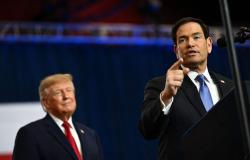
The meetings paved the way for Syrian President Ahmed al-Sharaa to score two major wins: advance his vow to unite all Syrian territory under one leadership and become the favored Syrian partner for the US administration under President Donald Trump, the sources said.
His offensive effectively wiped out the autonomous zone that Kurdish authorities had hoped to maintain in Syria’s northeast and tested the boundaries of Washington’s support for Sharaa, who once led al Qaeda’s local affiliate.
But the Syrian rebel-turned-president came out on top, with US envoy Tom Barrack saying Washington could now partner with the Syrian state and had no interest in maintaining a separate role for the SDF.
“It seems Sharaa is a master strategist,” said a U.S. source briefed on Washington’s position on Syria.
Syria proposed offensive weeks ago
The US had been a backer of the SDF since 2015, when the force was conceived to expel the Islamic State group from Syria’s northeast.
The SDF later used that territory to establish an autonomous enclave, with separate civilian and military institutions.
But in late 2024, Sharaa’s rebel forces ousted longtime ruler Bashar al-Assad and pledged to bring all of Syria under the new government’s control, including SDF-run areas. After months of talks in 2025, a year-end deadline for the SDF to integrate with Damascus passed with little progress.
That’s when momentum for an offensive began to build.
On January 4, a Damascus meeting between Syrian officials and the SDF on integration was abruptly shut down by a Syrian minister, according to three Kurdish officials. The following day, a Syrian delegation traveled to Paris for US-brokered talks with Israel on a security pact.
Syrian officials have accused Israel of backing the SDF and in Paris, they urged Israeli officials to stop encouraging Kurds to delay integrating, two Syrian sources briefed on the meeting said.
While there, Syrian officials suggested a limited operation to recapture some SDF-held territory and received no objections, another Syrian source briefed on the matter said.
Syria’s information and foreign ministries did not immediately respond to Reuters questions about the Paris meeting.
The US State Department referred Reuters to a statement by Barrack issued on Tuesday that urged the SDF to integrate and said the US had no interest in a long-term military presence in Syria.
“Having been present for the entirety of the trilateral meeting in Paris myself, Israel never condoned an attack by the Syrian army on the Syrian Kurds. Any claim that we did so is false,” said Yechiel Leiter, Israeli ambassador to the US
The Syrian government received a separate message from Turkey that Washington would approve an operation against the SDF if Kurdish civilians were protected, a Syrian official said.
Turkey has repeatedly intervened in Syria against the SDF, accusing it of ties to the outlawed Kurdistan Workers’ Party, which fought a decades-long insurgency in Turkey.
“The agreement in Paris gave the green light for this war,” said Kurdish political official Hadiya Youssef.
Kurds say US betrayed them
Two weeks later, the offensive was underway and Washington began signaling to the SDF that it was retracting its longstanding support, a U.S. diplomat, one of the Syrian sources and another Syrian interlocutor briefed on the issue said.
On January 17, Barrack met with SDF commander Mazloum Abdi in the Kurdistan region of Iraq and told him that US interests lie with Sharaa, not the SDF, the three sources said. An SDF official denied the account.
A US military official and two Kurdish officials said the US had given the SDF assurances of protection if Sharaa’s offensive harmed Kurdish civilians or destabilized detention centers holding Islamic State detainees.
As Syrian troops pushed past the zone they originally proposed to capture, the US military urged them to halt their advances and coalition aircraft fired warning flares over some flashpoint areas. But those actions fell far short of Kurdish expectations.
“What the coalition forces and American officials are doing is not acceptable,” said Youssef, the Kurdish political official. “Are you truly lacking in principles? Are you so willing to betray your allies?”
Asked about US assurances, the US State Department referred Reuters to Barrack’s statement on SDF integration.
Sharaa nearly overplays hand
Sharaa nearly overplayed his hand in the offensive’s final stage, the US source briefed on Washington’s position and two other US sources familiar with its policy said.
His forces had swiftly recaptured Arab-majority provinces from the SDF and kept advancing. By January 19, they were encircling the final Kurdish-held cities in Syria’s northeast, despite a ceasefire announced the previous day.
But the US administration was angry that Syrian troops had ignored the truce and feared mass violence against Kurdish civilians, the three US sources said.
Two of the sources said US lawmakers were considering reimposing sanctions on Syria if fighting continued.
A White House official told Reuters the U.S. was monitoring developments in Syria “with grave concern” and urged all parties to “prioritize the protection of civilians across all minority groups.”
With his forces approaching the Kurds’ last strongholds, Sharaa suddenly announced a new ceasefire on Tuesday. He said his troops would not proceed if the SDF proposed an integration plan by the end of the week.
The three U.S. sources said Sharaa’s abrupt announcement had satisfied Washington and that he was now “in the clear.”
Minutes later, Barrack issued his statement.
The original purpose of the SDF as a combat force against the Islamic State had “largely expired”, he said, and the greatest opportunity for Kurds was under Sharaa’s new government. — Reuters
These were the details of the news US pressure and secret talks paved way for Syria’s push into Kurdish-held northeast for this day. We hope that we have succeeded by giving you the full details and information. To follow all our news, you can subscribe to the alerts system or to one of our different systems to provide you with all that is new.
It is also worth noting that the original news has been published and is available at Malay Mail and the editorial team at AlKhaleej Today has confirmed it and it has been modified, and it may have been completely transferred or quoted from it and you can read and follow this news from its main source.