Hello and welcome to the details of China’s Venezuela oil ties face uncertainty after US ousts Maduro and now with the details
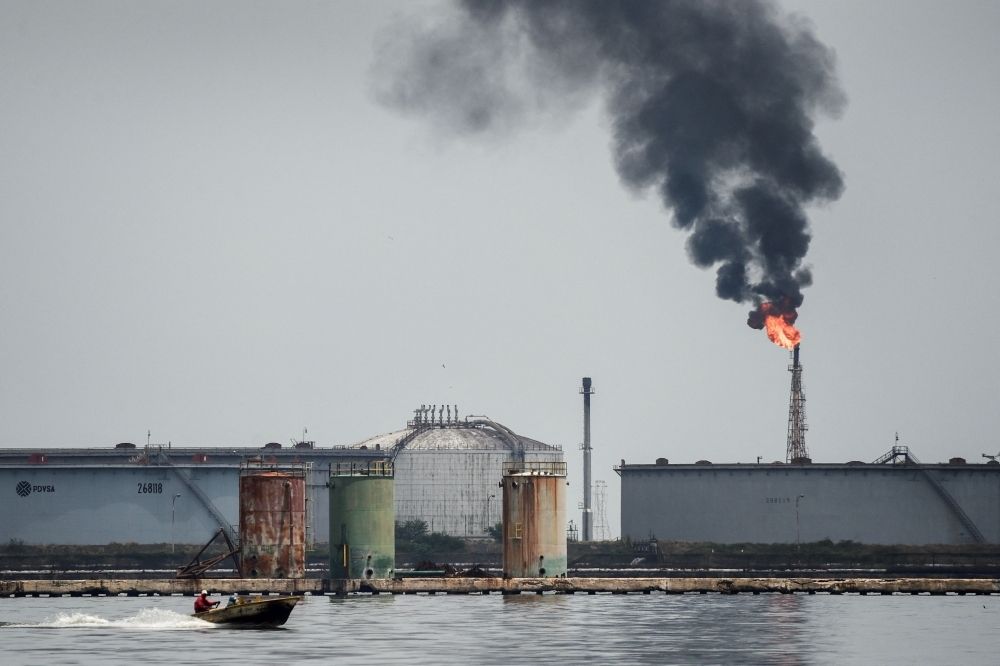
Nevin Al Sukari - Sana'a - View of an oil refinery in the Maracaibo lake, in this file picture dated May 2, 2018 in Maracaibo, Venezuela. — AFP pic
(New users only) Unlock 4%* + 10%* p.a. promo rate for 3 months and enjoy FREE RM10 & when you sign up using code VERSAMM10 with min. cash of RM100 today! T&Cs apply.
BEIJING, Jan 9 — China was the dominant buyer of Venezuelan oil under deposed president Nicolas Maduro, the fulcrum of a symbiotic partnership that propped up the South American economy and gave Beijing regional influence.
But after a US military operation seized the Venezuelan leader and President Donald Trump pledged to take over the country’s decrepit crude production facilities, China’s future with Caracas is murky.
Here are the key questions:
How much oil was China buying?
China imported around 400,000 barrels per day of Venezuelan oil last year, according to data compiled by intelligence firm Kpler.
That accounted for more than half of all crude exported from the country, estimates show.
Much of the Venezuelan oil ending up in China is transferred from one ship to another in waters off Malaysia or through other third countries — a way of disguising the commodity under tight US sanctions.
The purchases offered a crucial lifeline to Maduro’s government, keeping the state apparatus afloat in the face of increasing pressure from Washington and simmering domestic unrest.
How is it used?
Venezuelan crude is sludgy and “sour”, indicating high sulfur content that requires intensive processing.
In China, the dirty job is handled mainly by small, independent refineries concentrated near the eastern shore known as “teapots”.
In contrast to state-owned giants, teapots are scrappy, profit-driven outfits that collectively are the main buyers of discounted, sanctioned oil, including from Venezuela and Iran.
As well as contributing to China’s domestic energy production, Venezuelan oil is also a source of bitumen, or asphalt, used for paving roads and roofing buildings.
What did Beijing gain?
China relies on imports from a strategically diverse range of suppliers for its own energy security.
Just a small part of that equation, Venezuela was the source of roughly four to five per cent of Chinese crude imports last year, according to estimates.
Many oil shipments have been transacted as repayment for hefty investment from Beijing in Venezuelan development projects over recent decades.
Caracas still owes around US$10 billion (RM41 billion) in debt for Chinese loans that totalled about US$60 billion in 2023, according to the Center on Global Energy Policy at Columbia University.
China holds “hope that Latin America, including Venezuela, will be an important node for its Belt and Road Initiative,” Eurasia Group’s China Director Dan Wang told AFP, referring to President Xi Jinping’s signature overseas investment drive.
Beijing has been seeking to “unite the Global South”, said Wang, noting “important progress” it has made with “a few friendly countries” in the region, including Venezuela.
Can China keep buying?
Washington’s military intervention is likely to strangle the oil flows in the near future.
But soon after Maduro’s ouster, Trump said that US firms will eventually sell “large amounts” to global buyers — including “many... who are using it now” — once the crumbling local industry is rebuilt.
In the meantime, China’s “purchases could be easily directed to other oil suppliers”, said Wang.
China’s oil imports from Russia and Saudi Arabia dwarfed those from Venezuela last year.
However, Venezuela has the largest proven reserves in the world, with 303.2 billion barrels, according to Opec. That puts it ahead of Saudi Arabia and Iran.
In the long run, Wang said she anticipates China will continue buying Venezuelan oil.
Trump “wants a deal”, she said.
How are US-China ties affected?
China’s foreign ministry has strongly condemned Trump’s military action against Maduro, bashing it as a “clear violation” of “basic norms in international relations”.
Despite the harsh rhetoric, experts say that the fundamental interests and challenges in the relationship haven’t changed.
Xi is preparing to host Trump for a state visit to China in April, a closely watched diplomatic engagement as the world’s top two economies navigate a shaky trade war truce reached late last year.
“Both sides have made enough efforts to make sure that meeting happens,” Wang told AFP, adding that she does not expect Washington’s recent moves in Venezuela to change the outlook for the China visit.
Still, commentators — and Trump himself — have increasingly framed US policy through the lens of a revived “Monroe Doctrine”, a worldview that carves the globe into spheres of influence dominated by major powers.
“Under President Trump, certainly, China’s political influence in the region will decrease,” said Wang. — AFP
These were the details of the news China’s Venezuela oil ties face uncertainty after US ousts Maduro for this day. We hope that we have succeeded by giving you the full details and information. To follow all our news, you can subscribe to the alerts system or to one of our different systems to provide you with all that is new.
It is also worth noting that the original news has been published and is available at Malay Mail and the editorial team at AlKhaleej Today has confirmed it and it has been modified, and it may have been completely transferred or quoted from it and you can read and follow this news from its main source.