
Hello and welcome to the details of Cruise ship hantavirus scare revives memories of deadly Argentina ‘super-spreader’ outbreak and now with the details
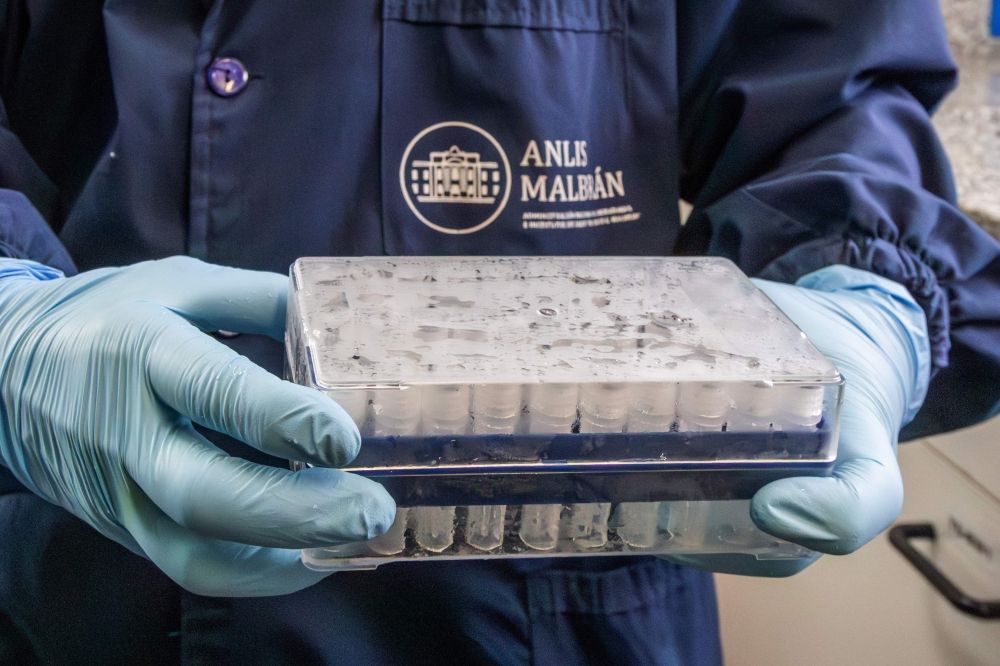
Nevin Al Sukari - Sana'a - This handout picture released by Argentina’s Health Ministry shows a scientist from the Malbran Institute handling containers used to diagnose the Andes hantavirus, which contain RNA from the Andes virus as part of the detection process, in Buenos Aires on May 6, 2026. — Argentine Health Ministry handout pic via AFP
PARIS, May 9 — An elderly man had just started running a fever when he walked into a birthday party in the Argentine village of Epuyen in 2018.
That began the last “super-spreader” event of the Andes strain of hantavirus, before a recent deadly outbreak on a cruise ship focused attention on this rare disease.
With the race on to track down anyone who had contact with infected passengers, an investigation into the 2018 outbreak has offered clues to how this illness spreads.
Argentine scientists analysed samples from most of the 33 infected people, which included 11 deaths, during the Epuyen outbreak, and reconstructed how people interacted at that fateful party.
They found that isolation measures helped stave off a wider outbreak — and that most human-to-human transmissions occurred on the first day the infected person had a fever.
Three people have died during the MV Hondius outbreak, including a Dutch couple who had travelled to Argentina, where hantavirus is endemic, before boarding the ship.
Two confirmed hantavirus patients are receiving care, one in Johannesburg and one in Zurich.
Three suspected cases have also been evacuated from the ship, with one of them testing positive for hantavirus, a Dutch hospital said Thursday.
The World Health Organization has emphasised that the public risk is low and believes that the Andes hantavirus is not like Covid-19, which was an entirely new virus when it emerged and started a pandemic.
‘Super-spreaders’
The 2018 outbreak began when a 68-year-old Epuyen resident became infected with the Andes strain, likely while coming into contact with rodent urine, droppings or saliva near his home.
This is normally how humans catch hantavirus — Andes being the only strain known to spread between humans.
On November 3, 2018, the man attended a birthday party for 90 minutes along with around 100 other people in the village in Argentina’s Chubut Province, near the Chilean border.
Five people who had contact with him developed symptoms in the following weeks, according to the 2020 study in the New England Journal of Medicine.
Three symptomatic people — dubbed “super-spreaders” — accounted for two-thirds of infections.
One then infected six people “because of his active social life”, the study said. He died 16 days after displaying symptoms.
His wife, the third super-spreader, was feeling ill when she attended his wake, where 10 more people were infected.
Back at the party, a reconstruction of the scene determined that the first patient sat at a table within a metre (just over three feet) of several people he infected.
However, the man merely crossed paths with another on the way to the bathroom, saying “Hello” as he went, the study said.
During the outbreak, people appeared to be infected mostly “through inhalation of droplets”, it added.
Timing of symptoms ‘critical’
Exactly when hantavirus symptoms first emerged was “critical”, the study emphasised.
In more than half of the cases, transmission “could be accurately established as the day of onset of fever in the primary case”, it explained.
More than 80 health care workers were in close contact with symptomatic patients at hospitals, rarely taking many precautions, yet none became infected.
When Argentine authorities put symptomatic patients in isolation and told contact cases to self-quarantine, it “likely curtailed further spread”, the study said.
Olivier Blond, analyst and biologist at Argentine research agency Conicet, highlighted the successful containment of the Epuyen outbreak via “selective respiratory isolation”.
“This temporary ‘deprivation’ of freedom helped preserve the health and well-being of the entire region by preventing the virus from spreading,” Blond told AFP.
Isolation and quarantine measures are now in place for those in contact with people on the cruise ship.
On Thursday, the WHO said it expects the cruise ship outbreak will be “limited” if countries follow public health measures.
But it said more cases could emerge, because it can take up to six weeks between being infected and developing symptoms.
Raul Gonzalez Ittig, a Conicet researcher and professor at the National University of Cordoba, told AFP that hantavirus would not spread as quickly as Covid.
Since hantavirus is “highly lethal”, he said, “deaths start appearing quickly, isolation measures are put in place quickly, and the chain of transmission is rapidly stopped”.
With Covid, “only later do deaths start to accumulate”, he said, while with hantavirus, “everything happens much faster”.
“That is why there is not as much chance of a hantavirus pandemic.” — AFP
These were the details of the news Cruise ship hantavirus scare revives memories of deadly Argentina ‘super-spreader’ outbreak for this day. We hope that we have succeeded by giving you the full details and information. To follow all our news, you can subscribe to the alerts system or to one of our different systems to provide you with all that is new.
It is also worth noting that the original news has been published and is available at Malay Mail and the editorial team at AlKhaleej Today has confirmed it and it has been modified, and it may have been completely transferred or quoted from it and you can read and follow this news from its main source.